


News
Stay Steady: Improving Balance to Prevent Falls

We tend to take balance for granted when we’re regularly skiing, biking or hiking. Unfortunately, it’s one of the first abilities to decline with age, and one that can cause a cascade of health problems. But the good news is, intervening early and working on targeted exercises can positively change your health trajectory, helping you remain active and independent.
Why Balance Declines, and Why It Matters
“As we age, the body’s systems that support balance begin to decline,” says Lucas Higgins, physical therapist at Howard Head Sports Medicine. “The vestibular system in the inner ear becomes less sensitive, muscle mass decreases and changes in vision can also affect our ability to maintain stability.”As these systems weaken, we often feel less confidence in our physical activities, including walking, so we slow down and avoid challenging our balance. This leads to further decline, causing a negative feedback loop.
Falls in older adults can result in serious injuries, from brain injuries to fractures.
“The body’s slower healing process means that even seemingly minor injuries can have a major impact on overall health,” Higgins says. “After a fall, many individuals experience a loss of mobility and independence, which can increase their risk of future falls and worsen existing health conditions due to decreased activity levels. In some cases, complications from these injuries, such as infections, blood clots or pneumonia, can lead to life-threatening conditions.”
Early Warning Signs You Shouldn’t Ignore
Signs of balance issues often show up during activities that demand quick adjustments or unfamiliar movements, from smashing through crud snow to catching a toe on a branch while hiking. If you notice decreased stability or confidence on terrain, wobbliness when standing on one leg to pull on a sock, trouble navigating familiar rooms in low light or difficulty with balance-challenging activities like stand-up paddleboarding, it may signal that your balance is beginning to decline. Simply feeling more fearful or restricted in movement can indicate a problem, even if you don’t notice any significant differences during routine activities, he explains.While group classes are beneficial, targeted tests and individualized exercises by physical therapists can make all the difference. They evaluate the vestibular system, or inner ear; vision, which many people use to overcompensate for lack of balance; and the somatosensory system, which helps us accurately feel our feet on the ground.
“It’s very individualized. We can look at what your specific deficits are, and we can almost always make improvements,” shares physical therapist Krystal Schlegel, adding that early intervention increases odds of returning to baseline even more. “If you wait a long time and there are more systems impaired and things are worse, then there’s more to fix, and certain systems compensate.”
Pre- and post-treatment balance assessments measure the risks of falling, and often, people’s confidence increases when they see their scores improve after prescribed exercises.
“And if you’re more confident, you’re also using more muscles, as opposed to holding onto furniture every step of way,” Schlegel says.
How Targeted Training Can Restore Stability
Targeted exercises address specific weakness, from over-relying on visual cues to strengthening key muscles and improving coordination. Challenges progressively increase: perhaps starting on standing on one leg while holding onto a railing, then letting go and possibly moving on to balance tools, or opening and closing eyes and moving the head back and forth while slowly walking. Hip strength is key when it comes to balance, she adds, so depending on the particular imbalance, clients work on specific movements for strength and agility.“Similarly to a muscle, balance must be challenged safely in order to maintain or improve,” Higgins says. “In the same way that someone performs squats to strengthen their quads, they must dedicate time to challenge their balance systems to keep them operating at their best.”
Sometimes, home adjustments and tools become necessary. For example, a walking stick can be useful to provide feedback to someone with peripheral neuropathy. Removing throw rugs and clutter that can trip someone up helps, as do grab bars in slippery showers. Nightlights can also help those more visually dependent for balance.
“Assistive devices can be great in providing support and stability to an individual on particularly uneven or slippery surfaces,” Higgins says. “They can also provide support for prolonged activity or standing to reduce load on and fatigue in the lower extremities. For individuals prone to dizziness or lightheadedness, it's crucial to take time to stand up slowly and check how they feel before moving, as this can help prevent falls caused by sudden changes in posture.”
As with any healthy lifestyle habit, the sooner you make proactive changes, the better.
More News
-
New!
More
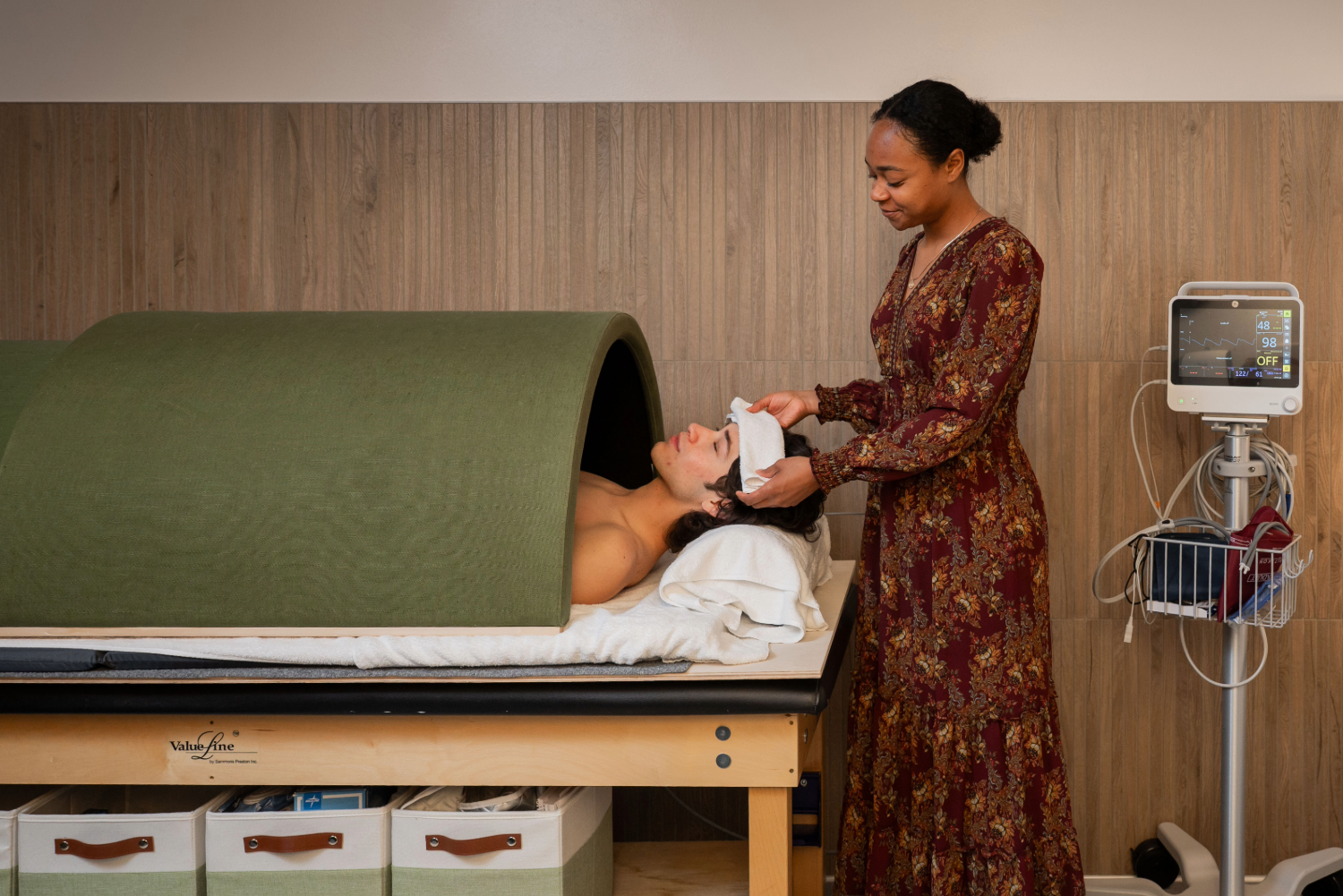
Hot, Cold and Mental Health: Inside Vail Health’s CHILL’D Research Study
Depression, a mental illness affecting more than 18% of American adults, has no blood marker or single biological cause. It looks and feels different in everyone because the brain is a complex organ, and there is no single way that depression develops. Like many mental health conditions, depression can be treated through medical, pharmaceutical and alternative approaches. One promising avenue under study at Vail Health’s Behavioral Health Innovation Center is contrast therapy — combining sauna and cold plunge treatments.
-
New!
More

What to Expect Before, During and After a Colonoscopy
If you've been putting off a colonoscopy, you're not alone. It's one of the most recommended — and most avoided — preventive screenings in medicine. But here's what most people don't realize until after their first one: the procedure itself is a non-event. You're asleep. You don't feel a thing. What people actually dread, and what they talk about afterward, is the prep. The good news is that even the prep is manageable, and the payoff is enormous. Colorectal cancer is one of the most preventable cancers when caught early. A colonoscopy doesn't just detect it; in many cases, it stops cancer before it starts.
-
New!
More
Navigating Men’s Sexual Health: Erectile Dysfunction and the Bigger Picture
For something so common — and treatable — erectile dysfunction (ED) is still surprisingly difficult to talk about. “The biggest misconception men have is that there’s a mechanical or physical problem with them, and that’s usually not the case,” explains Dr. Joseph Dall’Era, a urologist at Vail Health. In reality, ED is far more nuanced and manageable than people realize. Understanding what’s happening and knowing when to speak up can shift the experience.