


News
What to Expect Before, During and After a Colonoscopy

If you've been putting off a colonoscopy, you're not alone. It's one of the most recommended (and most avoided) preventive screenings in medicine. But here's what most people don't realize until after their first one: the procedure itself is a non-event. You're asleep. You don't feel a thing. What people actually dread, and what they talk about afterward, is the prep.
The good news is that even the prep is manageable, and the payoff is enormous. Colorectal cancer is one of the most preventable cancers when caught early. A colonoscopy doesn't just detect it; in many cases, it stops cancer before it starts.
Who Should Get One, and When?
Colon cancer screening used to begin at age 50. That recommendation has changed."The rate of colorectal cancer in younger Americans is much more prominent now," says Dr. Barry Hammaker, general surgeon at Vail Health. "That's essentially why the screening age moved from 50 to 45."
Current guidelines recommend:
- Average risk: Begin screening at age 45.
- Family history: If a parent, sibling or child has been diagnosed with colon cancer, start at age 40 — or 10 years before their diagnosis age, whichever comes first.
The Prep
The bowel prep, clearing out your colon before the procedure, is the part people dread most. Done right, it's uncomfortable but very manageable. Done poorly, it can mean having to repeat the colonoscopy entirely.
A few days before
Cut out insoluble fiber. That means raw vegetables, fruit skins, beans and toppings like chia seeds. Hammaker recommends stopping these three to four days before your prep day. If you deal with chronic constipation, your doctor may have you start taking Miralax twice a day for up to five days before your prep.
The day before
Most patients of Hammaker’s use a split-dose prep called SUPREP, which means one dose around 6 p.m., a second dose around 9 or 10 p.m. It works by drawing liquid into the colon to flush everything out.
The single most important tip? Stay hydrated.
"If somebody's not hydrated, the medicines don't work as well and we don't get as good of a clean out," Hammaker says. Drink fluids throughout. It makes the whole process work better and feel better.
During the Procedure
A colonoscopy lasts about 15–30 minutes with propofol sedation, so you’ll be asleep and usually have little memory of the procedure. If polyps are found, they’re typically removed on the spot, and biopsies may be taken as needed. Recovery takes place in the facility and should be ready to go home an hour after the procedure- but you'll need a driver, so plan ahead.
Recovery
After the procedure, take it easy and stick to lighter meals. By the next morning, you're back to normal. You can work, exercise, and eat regular food. Bowel movements typically return within one to three days. If your colonoscopy came back completely clean and your prep was thorough, you likely won't need another one for 10 years.
If Something Is Found
Finding something during a colonoscopy isn't necessarily bad news, rather it's often exactly the point."If we see polyps, we take those out so they can't turn into a cancer because they're gone," says Hammaker.
Polyps removed during the exam are sent to pathology. Depending on their type, number and size, your next colonoscopy will be scheduled at one, three or five years out. Biopsy results, when taken, typically come back within five business days, and your doctor or nurse will call you personally with results and next steps.
When Surgery Is the Next Step
Occasionally, a colonoscopy reveals something that requires more than a scope. For those cases, Dr. David Ford, general and robotic surgeon at Vail Health, performs robotic colectomy, a minimally invasive approach that uses specialized instruments and 10x stereoscopic visualization to remove sections of the colon through small incisions."Robotic surgery uses specialized wristed instruments that allow surgeons to perform the same complex dissection and suturing they would do in open surgery, but without a large incision,” Ford explains.
Compared to traditional open surgery, patients experience less pain, faster return of bowel function and shorter hospital stays, typically one to three days versus four to seven. Most patients are back to a regular diet within 24 to 48 hours of surgery.
The Fear Is Worse Than the Reality
The most common feedback doctors hear from first-time patients? They wish they hadn't waited so long."I always ask patients to be advocates for colon cancer screening," Hammaker says. "Let your friends know. It's not that big of a deal, and it can be lifesaving."
If you're still nervous, Vail Health offers office visits before you commit to anything. Come in, ask your questions and meet the team. Colon cancer prevention starts with a conversation.
More News
-
New!
More
Hot, Cold and Mental Health: Inside Vail Health’s CHILL’D Research Study
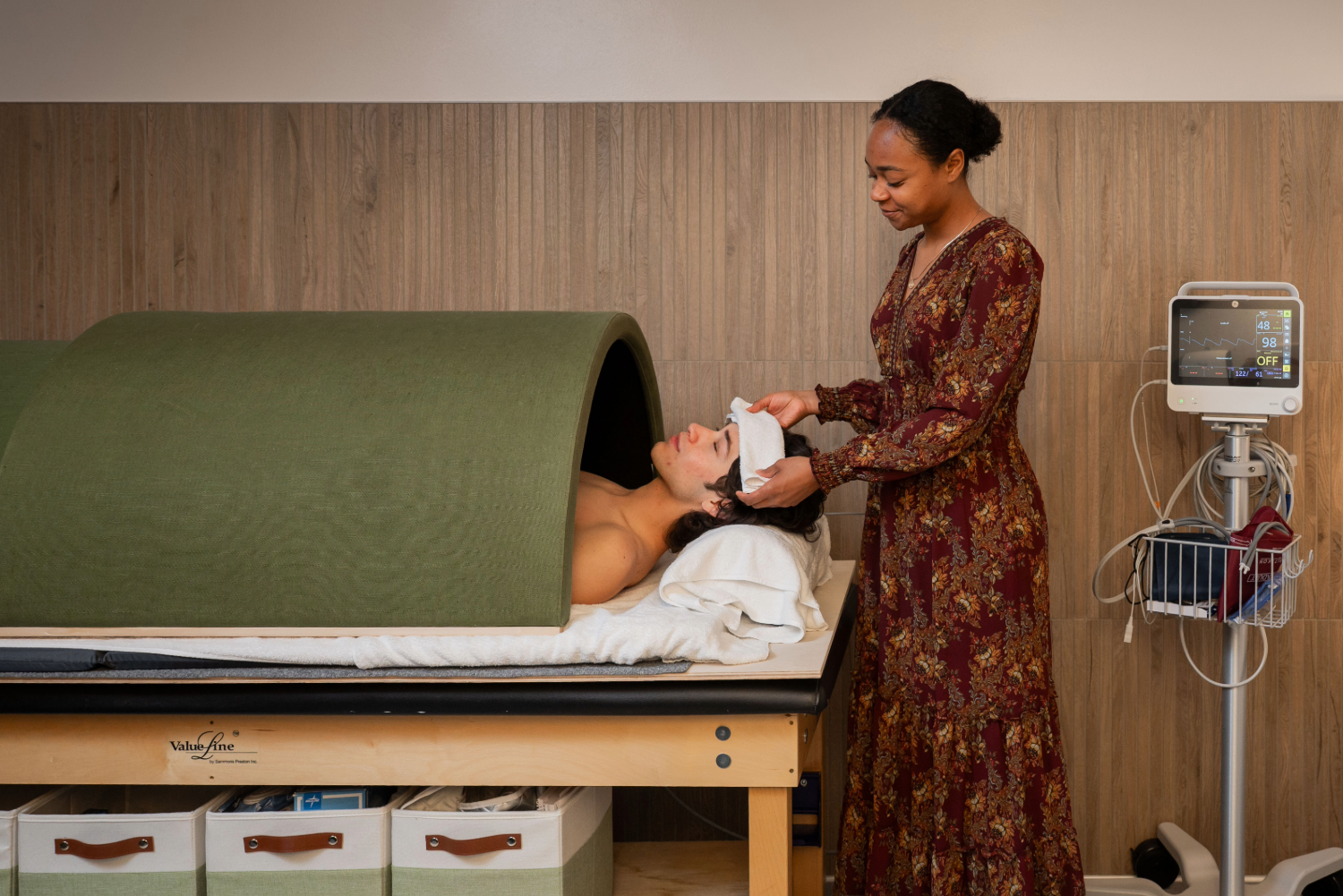
Depression, a mental illness affecting more than 18% of American adults, has no blood marker or single biological cause. It looks and feels different in everyone because the brain is a complex organ, and there is no single way that depression develops. Like many mental health conditions, depression can be treated through medical, pharmaceutical and alternative approaches. One promising avenue under study at Vail Health’s Behavioral Health Innovation Center is contrast therapy — combining sauna and cold plunge treatments.
-
New!
More

Navigating Men’s Sexual Health: Erectile Dysfunction and the Bigger Picture
For something so common — and treatable — erectile dysfunction (ED) is still surprisingly difficult to talk about. “The biggest misconception men have is that there’s a mechanical or physical problem with them, and that’s usually not the case,” explains Dr. Joseph Dall’Era, a urologist at Vail Health. In reality, ED is far more nuanced and manageable than people realize. Understanding what’s happening and knowing when to speak up can shift the experience.
-
New!
More

AI in the Exam Room: What Patients Should Know About Artificial Intelligence in Healthcare
When you walk into a medical appointment today, you might notice something different. Your doctor is looking at you more and less at their computer. They speak through their findings, and you walk away with greater clarity. The result? You feel seen and heard. That’s because providers are implementing a new artificial intelligence technology that captures their conversations. If it sounds scary, it shouldn’t. At Vail Health, AI isn’t replacing physicians or making medical decisions. Instead, it’s working behind the scenes to support providers so they can focus on what matters most: the patient.