




How Acupuncture Really Works: A Science-Based Perspective
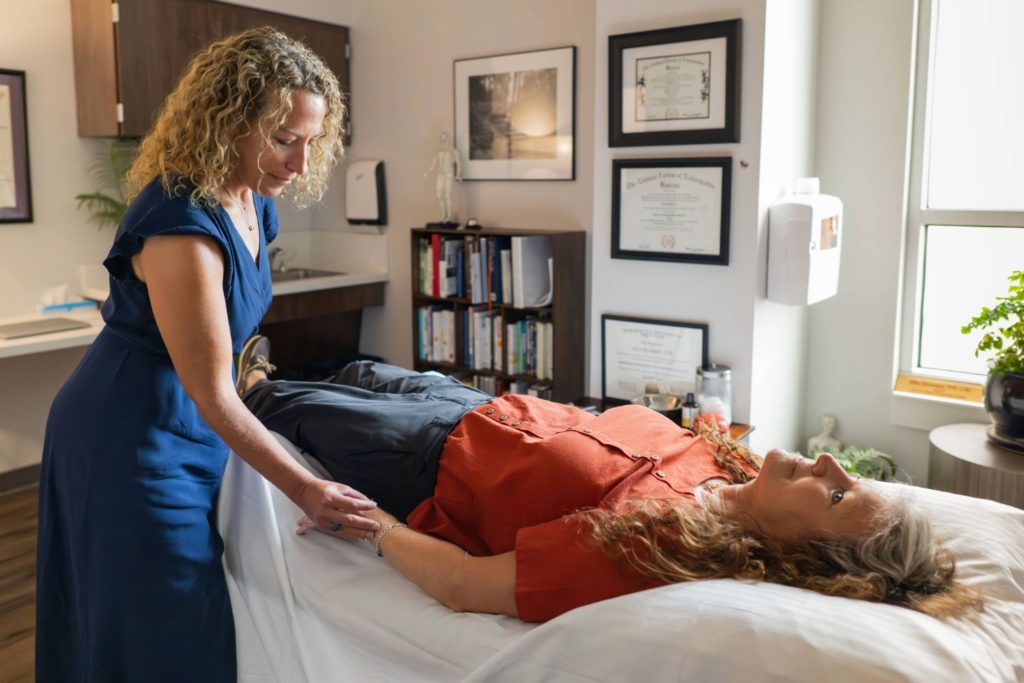
Acupuncture is not “energy medicine,” “woo-woo,” or some mystical practice that requires blind faith. While the language of Chinese Medicine often refers to the activation and movement of Qi, acupuncture itself is not a magical or unexplainable therapy. Unfortunately, the way acupuncture has historically been translated and discussed has made it feel inaccessible, even incompatible, with science-minded, evidence-based practitioners and patients.
That framing does acupuncture a disservice.
Acupuncture and Human Physiology
Modern research has helped us understand what acupuncturists have observed clinically for centuries. Acupuncture works through direct, measurable effects on the nervous, vascular, immune, and endocrine systems. Functional MRI (fMRI) studies have demonstrated that acupuncture stimulation modulates activity in specific brain regions involved in pain perception, emotional regulation, and sensory processing, providing measurable imaging evidence of central nervous system effects 1.
Acupuncture points are best understood as neurovascular nodes, areas of dense sensory nerve fibers, blood vessels, lymphatic structures, and mast cells. These points have been shown to exhibit lower electrical resistance and higher conductivity than surrounding tissue, and they are often located at anatomical junctions where connective tissue planes, nerves, and vessels intersect.
The classical “meridians” closely map to fascial planes, nerve pathways, vascular routes, and interstitial connective tissue networks 2. Stimulating these nodes influences not only local tissue but also distant organ systems through central and peripheral nervous system signaling.
What Acupuncture Does in the Body
When an acupuncture needle is inserted, it creates a highly specific micro-stimulus that initiates a cascade of physiological responses:
- Improves circulation, increasing the delivery of oxygen, nutrients, immune cells, and anti-inflammatory mediators to tissues.
- Triggers the release of endogenous opioids such as endorphins and enkephalins, as well as neurotransmitters like norepinephrine and serotonin.
- Modulates pain perception through spinal cord and brain signaling pathways 3.
- Relaxes muscle tension and reduces compression on nerves and surrounding structures.
- Activates the parasympathetic nervous system, reducing stress and promoting repair.
- Stimulates immune and endocrine signaling through controlled micro-inflammation that promotes tissue healing and systemic regulation
In short, acupuncture works because it communicates with the body’s regulatory systems, prompting the body to do what it already knows how to do: heal, adapt, and restore balance.
There is nothing mystical about this, even though the results can sometimes feel remarkable.
How Acupuncture Fits Into My Functional Medicine Practice
In my practice, acupuncture is not separate from functional medicine, it is an integral part of it.
Functional medicine helps us understand why the body is out of balance through detailed history, advanced lab testing, nutrition, targeted supplementation, and lifestyle interventions. Acupuncture is the hands-on component of that care. While nutrition and supplements provide the raw materials for healing, acupuncture delivers real-time input to the nervous system, circulation, and immune signaling.
This matters because the nervous system ultimately determines how well the body can respond to any therapy. If someone is stuck in a chronic stress response, even the best treatment plan may only go so far. Acupuncture helps shift the body out of “survival mode” and into a physiological state where healing can actually occur.
Patients often describe acupuncture as the moment their system finally exhales.
A Personal Evolution in Practice
Over the course of my years of practicing acupuncture, both the research and my own clinical experience have continued to deepen my understanding of how acupuncture works.
While I still firmly believe that acupuncture is grounded in real, measurable physiology, I have also come to appreciate that regulation does not stop at the level of tissue and nerves alone. The nervous system, brain, and consciousness are inseparable from physical healing.
This has led me to incorporate Esoteric Acupuncture almost exclusively into my practice. Esoteric Acupuncture does not replace physiology, it builds upon it. It works through precise neurological patterning, higher-order brain regulation, autonomic balance, and the body’s innate capacity for coherence and integration. Where traditional acupuncture excels at restoring function and relieving symptoms, Esoteric Acupuncture often addresses deeper regulatory patterns, including stress physiology, trauma imprinting, emotional processing, and the connection between mind and body.
Importantly, this is not a departure into “energy medicine” as many fear. It is an expansion into how the nervous system organizes experience, perception, and healing — an area modern neuroscience is only beginning to fully explore.
Why Language Matters
When we describe acupuncture as mystical or magical, we unintentionally alienate people who would benefit from it the most. Those who value science, logic, and evidence. Acupuncture does not require belief. It requires a body with nerves, blood vessels, and a nervous system capable of responding to stimulation.
People get better because acupuncture has real, physical effects on the human body.
If you’ve dismissed acupuncture in the past because you don’t “believe” in energy medicine, I invite you to reconsider. Acupuncture is not voodoo. It is a sophisticated, time-tested medical system that continues to be validated by modern research.
And sometimes, when the body finally receives the right signal, the results really do feel magical.
Selected Scientific References
- Wu MT, et al. Neuronal specificity of acupuncture response: a functional MRI study. Neuroimage. 2002;16(4):1028-1037
- Langevin HM, Yandow JA. Relationship of acupuncture points and meridians to connective tissue planes. Anat Rec. 2002;269(6):257-265. doi:10.1002/ar.10185
- Zhao ZQ. Neural mechanism underlying acupuncture analgesia. Prog Neurobiol. 2008;85(4):355-375. doi:10.1016/j.pneurobio.2008.05.004
Interested in exploring acupuncture or functional medicine for your health? Learn more about Dr. Eliza Klearman and the Vail Health Functional Medicine team at VailHealth.org/FunctionalMedicine, or call (970) 445-2489 to schedule an appointment.