

News
Foundational Behaviors That Extend Your Healthspan with Chris Lindley

Dr. Melissa O'Meara opened this Wellness Series with a line that stuck with me: "What a time to be alive." She meant it with equal parts wonder and concern, and so do I. Because we are living in the most optimized era in human history, and yet we may also be the sickest.
We are living longer than any generation before us. We have access to wearables, peptides, red light therapy, hyperbaric oxygen chambers, continuous glucose monitors, and a $100 billion supplement industry. And still, 6 in 10 adults have at least one chronic disease. 4 in 10 have two or more. If you were sitting in a room with your colleagues or neighbors today, statistically, half of them are managing a chronic condition right now.
We are adding years to our lives, but too many of those extra years are riddled with disease management rather than genuine vitality. The question I keep coming back to is: why?
In most cases, it isn't that we lack the tools. It's that we've started chasing marginal gains while neglecting the foundational behaviors that actually drive health outcomes.
The Optimization Trap
Scroll through social media for five minutes and you'll be served a dozen ads promising a quick, easy fix: a supplement that resets your metabolism, a device that optimizes your sleep, a test that unlocks your longevity potential. We are wired to want the shortcut. I get it. I've felt that pull too.But here's what I've learned working in population health: a continuous glucose monitor won't fix a sedentary lifestyle. It will, however, educate you about how your body responds to different foods and timing, and that knowledge has value. A supplement won't fix chronic sleep deprivation. A longevity test won't fix loneliness. These tools can inform and support good decisions, but they cannot substitute for the behaviors that actually move the needle.
The fundamentals don't require expensive equipment. They don't require a prescription. They just require consistency, and consistency is the hard part.
What Actually Matters
Movement
Cardio protects your heart. Strength training protects your independence. Muscle mass predicts longevity better than many clinical biomarkers, and VO₂max, your cardiovascular fitness level, is one of the strongest predictors of all-cause mortality we have in the literature. You don't need a sophisticated program. You need to lift heavy things regularly and raise your heart rate often.Nutrition
Ultra-processed foods drive systemic inflammation, full stop. A simple heuristic I share often: if it didn't exist 100 years ago, eat less of it. Protein becomes increasingly critical as we age to preserve the muscle mass that keeps us functional and independent. And alcohol? The current evidence is clear that there is no safe level when it comes to overall health benefit.Sleep
Sleep is the most powerful legal performance enhancer available to every single one of us, and it's free. Seven to eight hours per night meaningfully reduces cardiometabolic risk, improves mood, and sharpens cognition. Chronic sleep restriction elevates cortisol and drives insulin resistance. No biohacking device compensates for cutting this short night after night.Mental Health & Purpose
Depression and anxiety are not just quality-of-life concerns. They are independent mortality risks. Purpose predicts longevity. I've seen this in the data and I've seen it in people. No supplement fixes a life without direction. If you're experiencing anxiety, depression, or any psychological distress, seek support early and often. There is no version of optimal health that ignores what's happening between your ears.Social Connection
This one doesn't get enough attention in the wellness space. Loneliness carries a mortality risk roughly equivalent to smoking 15 cigarettes a day. Health is a team sport. The relationships we maintain, or neglect, are quietly shaping our biology every single day.Clinical Screening & Early Detection
Modern medicine is remarkable. Use it. See your primary care provider every year and ask specifically about recommended screenings based on your age, bloodwork, and family history. See your oral health provider at least annually, because oral health is systemic health. And if you're experiencing psychological concerns, don't wait until it becomes a crisis to seek support. The sooner you detect something, the sooner you can intervene and change course.You're Closer Than You Think
Here's what I want you to take away from all of this: if you lift weights, walk daily, sleep seven to eight hours, eat real food, limit alcohol, and maintain meaningful relationships, you are outperforming roughly 90% of the population on the behaviors that actually predict a long, healthy life.The question was never whether these fundamentals work. The science on that is settled. The question is whether we choose to follow them, consistently, over time, even when it's inconvenient.
Overall health doesn't change through policy alone, or a new test, or the latest gadget, or a better supplement stack. It changes through repeated behavior. Day after day. Year after year.
As my colleague Dr. Schuetze put it so well: "Go do the good stuff." That's the whole message. Everything else is just noise.
Interested in optimizing your lifestyle and healthspan? Connect with the Vail Healthspan team today!
More News
-
New!
More
Hot, Cold and Mental Health: Inside Vail Health’s CHILL’D Research Study
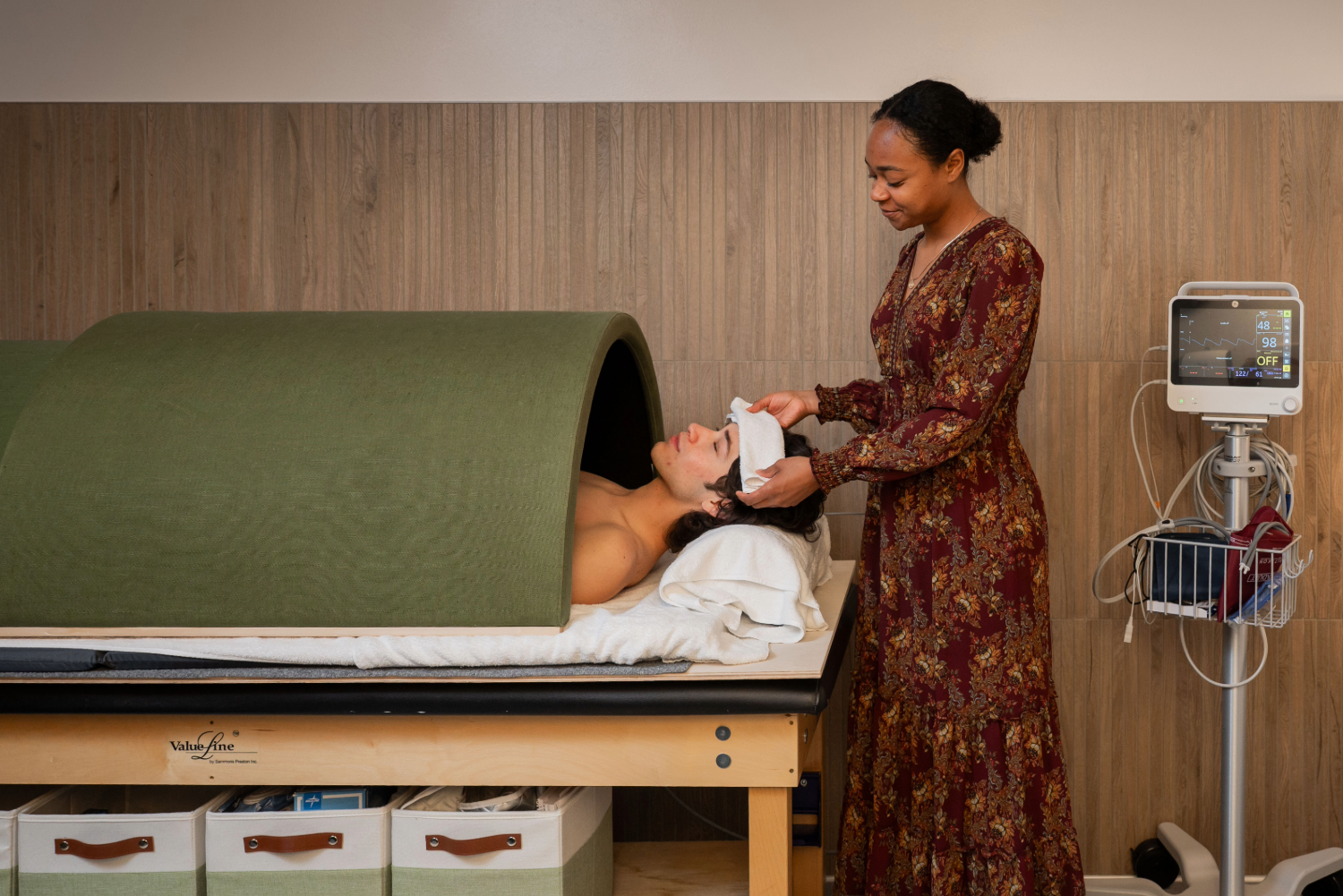
Depression, a mental illness affecting more than 18% of American adults, has no blood marker or single biological cause. It looks and feels different in everyone because the brain is a complex organ, and there is no single way that depression develops. Like many mental health conditions, depression can be treated through medical, pharmaceutical and alternative approaches. One promising avenue under study at Vail Health’s Behavioral Health Innovation Center is contrast therapy — combining sauna and cold plunge treatments.
-
New!
More

What to Expect Before, During and After a Colonoscopy
If you've been putting off a colonoscopy, you're not alone. It's one of the most recommended — and most avoided — preventive screenings in medicine. But here's what most people don't realize until after their first one: the procedure itself is a non-event. You're asleep. You don't feel a thing. What people actually dread, and what they talk about afterward, is the prep. The good news is that even the prep is manageable, and the payoff is enormous. Colorectal cancer is one of the most preventable cancers when caught early. A colonoscopy doesn't just detect it; in many cases, it stops cancer before it starts.
-
New!
More

Navigating Men’s Sexual Health: Erectile Dysfunction and the Bigger Picture
For something so common — and treatable — erectile dysfunction (ED) is still surprisingly difficult to talk about. “The biggest misconception men have is that there’s a mechanical or physical problem with them, and that’s usually not the case,” explains Dr. Joseph Dall’Era, a urologist at Vail Health. In reality, ED is far more nuanced and manageable than people realize. Understanding what’s happening and knowing when to speak up can shift the experience.