


News
Women's Health Column: Trouble with Urinary Incontinence?
As I stated in previous columns studies show that 80 percent of us gals have trouble with incontinence at some point in our lives. However just because it is common does not mean it's normal. Let's continue the conversation.
So you've been doing your kegels keeping track of your intake and output making sure you're not going just in case and you're still leaking.
I have been saving some things to tell you that you might not want to hear. You might have to give up coffee. Or wine ...
GOING COLD TURKEY
Or not. I often tell my patients that this is your life. It is you who decides what goes into your body and it is also you who decides what sacrifices disciplines and other things are worth it. Going cold turkey on the things that irritate your bladder may be what works best for you.
You may be so sick of leaking that if it resolves your incontinence you are willing to never have another cup of coffee or glass of wine again. But if these are a few of your favorite things there are some other things you might try.
ADJUST YOUR COFFEE HABIT
When it comes to coffee:
- Try Toddy or cold brewed coffee. This method of brewing cuts the acidity by 67% per the Toddy website claims. It has a really smooth rich flavor and is nice because you make a coffee concentrate that allows you to heat up one mug (or five!) at a time. A home brew system such as this will set you back anywhere from $35 to $100 depending on what website you order from and how fancy you want to get. Several of the local coffee shops have cold brewed coffee on the menu so you can try before you invest in a system for home.
- Try low acid coffee. I live in Edwards and frequent the Village Market. I know the store carries at least one type of low acid coffee. Give it a try!
- Try switching to decaf coffee instead.
- Another thing that works for a lot of people is dilution. Drink an 8 ounce glass of water for every cup of coffee or glass of wine beer or cocktail. You may need to do more like a 2:1 ratio of water to coffee. Play around with it your body will tell you when you get it right. I have had several patients tell me that they have started adding ice to their glass of wine and it has helped them.
DO WHAT WORKS FOR YOU
For some people cutting down on frequency makes a big enough difference that they can still enjoy a beer on Friday night if they have avoided alcohol during the week. Some people decide to drink what they want to on occasion knowing that they will need to stick pretty close to a bathroom the next day or may need to wear a thicker pad.
Basically it all comes down to What is important to you? If it's another chardonnay pad up and play on sister!
Stephanie Drew is a physical therapist with Howard Head Sports Medicine in Edwards who specializes in women's health pelvic floor rehabilitation and orthopedics. She can be reached at stephanie.drew@vvmc.com.
More News
-
New!
More
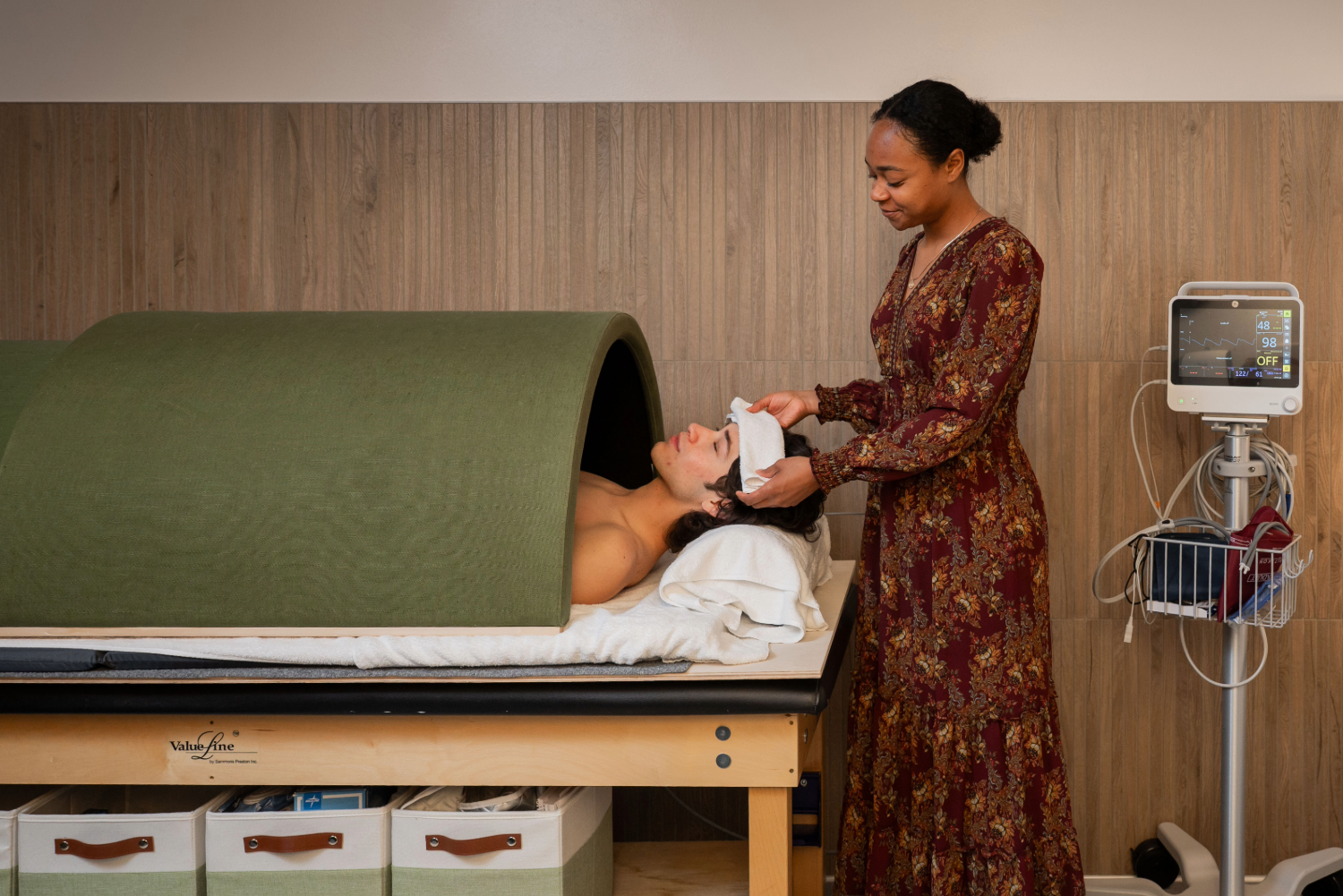
Hot, Cold and Mental Health: Inside Vail Health’s CHILL’D Research Study
Depression, a mental illness affecting more than 18% of American adults, has no blood marker or single biological cause. It looks and feels different in everyone because the brain is a complex organ, and there is no single way that depression develops. Like many mental health conditions, depression can be treated through medical, pharmaceutical and alternative approaches. One promising avenue under study at Vail Health’s Behavioral Health Innovation Center is contrast therapy — combining sauna and cold plunge treatments.
-
New!
More

What to Expect Before, During and After a Colonoscopy
If you've been putting off a colonoscopy, you're not alone. It's one of the most recommended — and most avoided — preventive screenings in medicine. But here's what most people don't realize until after their first one: the procedure itself is a non-event. You're asleep. You don't feel a thing. What people actually dread, and what they talk about afterward, is the prep. The good news is that even the prep is manageable, and the payoff is enormous. Colorectal cancer is one of the most preventable cancers when caught early. A colonoscopy doesn't just detect it; in many cases, it stops cancer before it starts.
-
New!
More

Navigating Men’s Sexual Health: Erectile Dysfunction and the Bigger Picture
For something so common — and treatable — erectile dysfunction (ED) is still surprisingly difficult to talk about. “The biggest misconception men have is that there’s a mechanical or physical problem with them, and that’s usually not the case,” explains Dr. Joseph Dall’Era, a urologist at Vail Health. In reality, ED is far more nuanced and manageable than people realize. Understanding what’s happening and knowing when to speak up can shift the experience.