




News
Vail Health receives first shipment of COVID vaccine
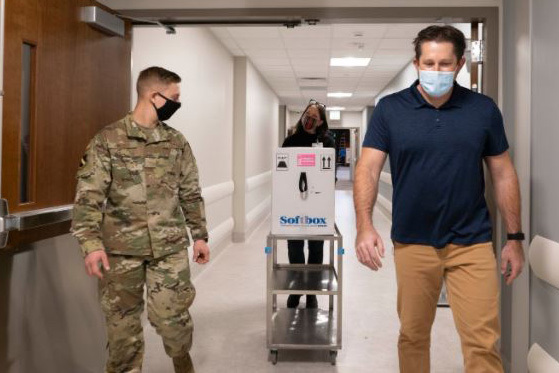
Eagle County received its first shipment of the coronavirus vaccine on Tuesday at Vail Health Hospital in Vail.
Vail Health is one of eight hospitals around the state to receive Pfizer’s vaccine after a FedEx van delivered the first shipment to the Colorado Department of Public Health and Environment’s lab in east Denver on Monday.
The first dose will be administered to a health care worker on Wednesday, said Sally Welsh with Vail Health.
Vail Health was chosen to be one of eight vaccine distribution centers based on its deep freezing capabilities, which are required to preserve the Pfizer vaccine. On the Western Slope, Vail and Grand Junction are the only two areas serving as distribution points.

Read the full article at VailDaily.com >
More News
-
New!
More
The Heart of Vail Health: Inside the Volunteer Corps
If Vail Health’s talented doctors and medical staff are the face of the hospital, the Volunteer Corps is its heart. What began in 1979 as 13 volunteers fundraising for a 10-bed hospital addition to Vail Valley Medical Center has grown into nearly 100 committed volunteers who have donated almost $1.8 million and countless hours to support Vail Health's programs and services, including Shaw Cancer Center and Beaver Creek Medical Center. The Corps’ motto sums up its work well: “We volunteer because our caring makes a difference — for others, for our community and for ourselves.”
-
New!
More
The Heart of It All: How Cardiovascular Health Shapes Longevity
Most of us know a healthy heart will increase our chances for a long and vital life, but how many of us truly understand how to live for a healthy heart? According to the American Heart Association, heart disease remains the number one cause of death, for both men and women, in the United States.
-
New!
More
GLP-1s and Your Health Journey: What You Need to Know
Interest in GLP-1 agonist medications, once used almost exclusively for diabetes, is soaring. Now widely referred to as weight loss injections, drugs like semaglutide (Ozempic, Wegovy) and tirzepatide (Mounjaro, Zepbound) are ubiquitous in celebrity chatter, social media and everyday patient conversations. But as demand grows, it’s increasingly important to separate hype from reality. Who qualifies for these drugs under FDA guidelines? When are they helpful? And when might carefully supported lifestyle changes offer a safer or more sustainable path?