


News
Vail Health Foundation Launches $100M Behavioral Health Fundraising Campaign
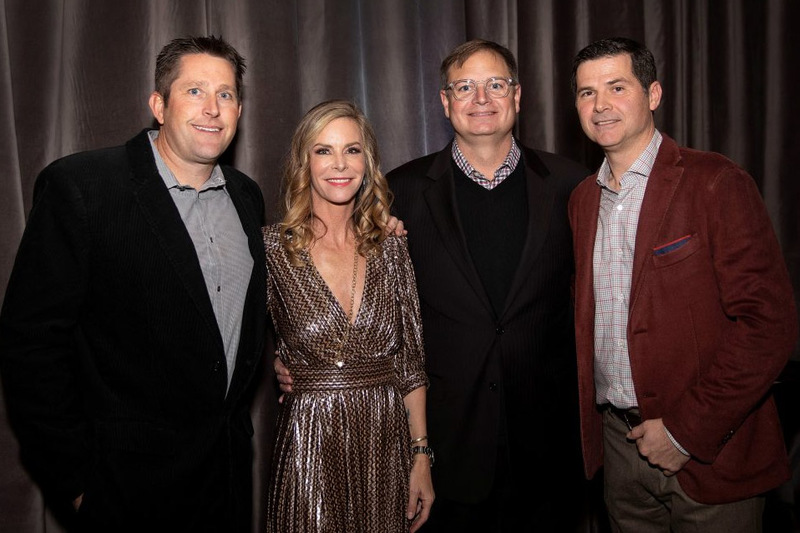
This article was first printed in the Vail Daily on December 29.2019 by John LaConte.
Vail Health shared staggering statistics about mental health issues in Eagle County before vowing to become the leader in combating the crisis on Saturday.
Amanda Precourt, credited as the impetus behind a new, $100 million fundraising effort, said nearly one in four local seventh- and eighth-graders had seriously considered suicide in 2017, “and 16 percent actually made a plan to commit suicide, according to stats from Vail Health.”
Precourt said Colorado has the fifth-highest rate of death by suicide in the United States and mountain communities in Colorado see three-times more deaths by suicide than the state average.
“And these rates are going up,” Precourt said. “In fact, here in Eagle County, Vail Health emergency visits for anxiety and depression alone have skyrocketed a staggering 465 percent in just four years,” she said.
Unanimous board approval
Eagle Valley Behavioral Health executive director Chris Lindley said that when his group approached the Vail Health board with information about Eagle County’s mental health crisis, “They approved unanimously to task the Vail Health Foundation to raise $100 million over the next few years. This is $100 million in addition to the $60 million that Vail Health has already contributed.”
The Precourt family kicked off the effort with a $15 million donation, which Amanda said was her family’s largest donation ever made in Eagle County. Sharing stories of her own battle with anxiety, Amanda said her father, Jay Precourt, has undergone an impressive metamorphosis in his understanding of those who struggle with mental illness.
“Jay has responded in kind with his generosity in showing if there is a need, there must be a way,” Amanda Precourt said.
Vail Health Foundation President Dan Pennington said the Precourts’ $15M contribution represents the bulk of the nearly $19M in donations already committed to the $100M fundraising effort.
“We wouldn’t have the $19 million committed so far to this campaign, nor would we have the $60 million that the Vail Health board committed to this initiative if it wasn’t for the bravery of Amanda Precourt,” Pennington said.
Amanda Precourt’s speech on Saturday was a verification of how far she has come in her own struggles. She said that while it is hard to talk about, and that she was shaking from being there, she wanted to share her story of her own suicide attempt in 2011. She credited her family and Dr. Marshall Thomas with her survival and said while she was in treatment she learned that she was not alone in her struggles.
“(Others in treatment) all had been unable to solve their problems at home, mostly due to the lack of medical resources available,” Precourt said. “As I slowly began to rebuild my mind, body, and soul, I began to realize there was a huge hole in the medical systems in most of our communities and a general lack of understanding about what it meant to live with a mental health diagnosis. And I began to realize that I had to survive not just for me but more importantly, to save others who were suffering.”
‘Going to take the entire valley’
The fundraising effort, called It Takes a Valley: Transforming Behavioral Health will support multiple organizations and programs across Eagle County, including Bright Future Foundation, Hope Center, Mountain Youth, Neighborhood Navigators, Speak Up Reach Out, Early Childhood Partners, Hearts Reign, My Future Pathways, and Eagle Valley Community Foundation to fund the Mobile Intercultural Resource Alliance.
Other early gifts to the campaign include:
- Doe Browning, a member of the Vail Health Foundation and Bright Future Foundation boards, has pledged the lead donation of $1 million to launch the Bright Future Foundation’s $3.4 million capital campaign to build a new home for families fleeing domestic violence in Eagle County.
- The Katz Amsterdam Charitable Trust has committed $525,000 to support behavioral health initiatives and organizations, including four sub-grants to the Eagle Hope Center, Eagle County Paramedics, Mountain Family Health Services, Eagle County Public Health Department, and a voucher program to increase access for those in need.
- Local first responders were among the first to donate to EVBH when they launched their “First to Respond, First to Give” fundraising campaign in September. The campaign has a 100 percent participation goal.
“It is going to take the entire valley to transform the behavioral health landscape,” Lindley said. “And it is going to take the generosity of the valley to reach our ambitious fundraising goal of $100 million.”
To be part of It Takes A Valley: Transforming Behavioral Health, visit the campaign website at http://www.ItTakesAValley.org.
More News
-
New!
More

Hot, Cold and Mental Health: Inside Vail Health’s CHILL’D Research Study
Depression, a mental illness affecting more than 18% of American adults, has no blood marker or single biological cause. It looks and feels different in everyone because the brain is a complex organ, and there is no single way that depression develops. Like many mental health conditions, depression can be treated through medical, pharmaceutical and alternative approaches. One promising avenue under study at Vail Health’s Behavioral Health Innovation Center is contrast therapy — combining sauna and cold plunge treatments.
-
New!
More

What to Expect Before, During and After a Colonoscopy
If you've been putting off a colonoscopy, you're not alone. It's one of the most recommended — and most avoided — preventive screenings in medicine. But here's what most people don't realize until after their first one: the procedure itself is a non-event. You're asleep. You don't feel a thing. What people actually dread, and what they talk about afterward, is the prep. The good news is that even the prep is manageable, and the payoff is enormous. Colorectal cancer is one of the most preventable cancers when caught early. A colonoscopy doesn't just detect it; in many cases, it stops cancer before it starts.
-
New!
More

Navigating Men’s Sexual Health: Erectile Dysfunction and the Bigger Picture
For something so common — and treatable — erectile dysfunction (ED) is still surprisingly difficult to talk about. “The biggest misconception men have is that there’s a mechanical or physical problem with them, and that’s usually not the case,” explains Dr. Joseph Dall’Era, a urologist at Vail Health. In reality, ED is far more nuanced and manageable than people realize. Understanding what’s happening and knowing when to speak up can shift the experience.