


News
Satisfying Sweets Without The Extra Sugar
Being mindful of added sugar consumption helps maintain health and prevent potential chronic disease. The US government's 2015-2020 Dietary Guidelines for Americans (DGA) daily recommended limits for added sugar are 6 teaspoons or less per day for children age 2-19 and for adult women and 9 teaspoons or less per day for adult men.
So how can you satisfy that sweet tooth and stay within the guidelines? Our Vail Health dietitian Annegret Kessler offers three tips:
Tip #1
Eat your fruit, don’t drink your fruit! Most fruit beverages are not 100% fruit juice and whole fresh fruit provides fiber which juice does not. Whole fresh fruit is also high in water content and can aid in hydration on hot summer days.
Tip #2
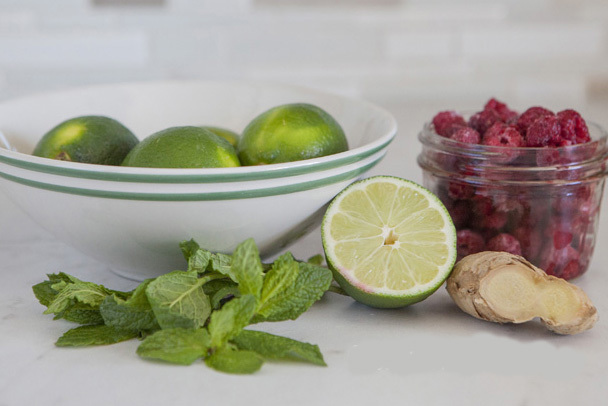
Create your own soda without the sugar. According to the most recent National Health And Nutrition Examination Survey, 47% of added sugars in the American diet come from sweetened beverages. Did you know there are 9 teaspoons of sugar in a 12 ounce can of soda? That is equal to or exceeds the maximum amount of sugar that is recommended for healthy eating in one day. Annegret recommends making your own soda with this simple recipe.
Recipe: Soda Base, Serving Size = 1 Cup
- ¼ Cup Frozen Fruit Concentrate or Homemade Concentrate
- Raspberry Ginger Lime
- ¼ cup raspberries
- ½ lime, sliced
- 1 tsp sliced fresh ginger
- 3 fresh mint leaves
- 1 Teaspoon Simple Syrup
- ¾ Cup Seltzer Water
*(Recipe from Diabetic Living, Summer 2018)
Remake Your Scoop! Don’t miss out on the hot summer night bowl of ice cream. Choose ice cream with less than 15 grams of sugar Per- Half Cup Portion
- Edy’s Slow Churned Mint Chocolate Chip, (13 grams of sugar)
- Breyers Delights Cookies and Cream, (9 grams of sugar)
- Halo Top Sweet Sherbet, (5 grams of sugar)
___________________________________________________________________________
About Vail Health's Food And Nutrition Department
(970) 479-5058
The mission of Vail Health's Food and Nutrition department is to improve patients' lives through quality nutritional care and expert education. We provide our in-patients with wholesome, nourishing and well-balanced meals that enhance their treatment and recovery. In addition, our goal is to educate patients on nutrition and health to help them make good decisions and maintain a healthy lifestyle.
More News
-
New!
More

Hot, Cold and Mental Health: Inside Vail Health’s CHILL’D Research Study
Depression, a mental illness affecting more than 18% of American adults, has no blood marker or single biological cause. It looks and feels different in everyone because the brain is a complex organ, and there is no single way that depression develops. Like many mental health conditions, depression can be treated through medical, pharmaceutical and alternative approaches. One promising avenue under study at Vail Health’s Behavioral Health Innovation Center is contrast therapy — combining sauna and cold plunge treatments.
-
New!
More

What to Expect Before, During and After a Colonoscopy
If you've been putting off a colonoscopy, you're not alone. It's one of the most recommended — and most avoided — preventive screenings in medicine. But here's what most people don't realize until after their first one: the procedure itself is a non-event. You're asleep. You don't feel a thing. What people actually dread, and what they talk about afterward, is the prep. The good news is that even the prep is manageable, and the payoff is enormous. Colorectal cancer is one of the most preventable cancers when caught early. A colonoscopy doesn't just detect it; in many cases, it stops cancer before it starts.
-
New!
More

Navigating Men’s Sexual Health: Erectile Dysfunction and the Bigger Picture
For something so common — and treatable — erectile dysfunction (ED) is still surprisingly difficult to talk about. “The biggest misconception men have is that there’s a mechanical or physical problem with them, and that’s usually not the case,” explains Dr. Joseph Dall’Era, a urologist at Vail Health. In reality, ED is far more nuanced and manageable than people realize. Understanding what’s happening and knowing when to speak up can shift the experience.