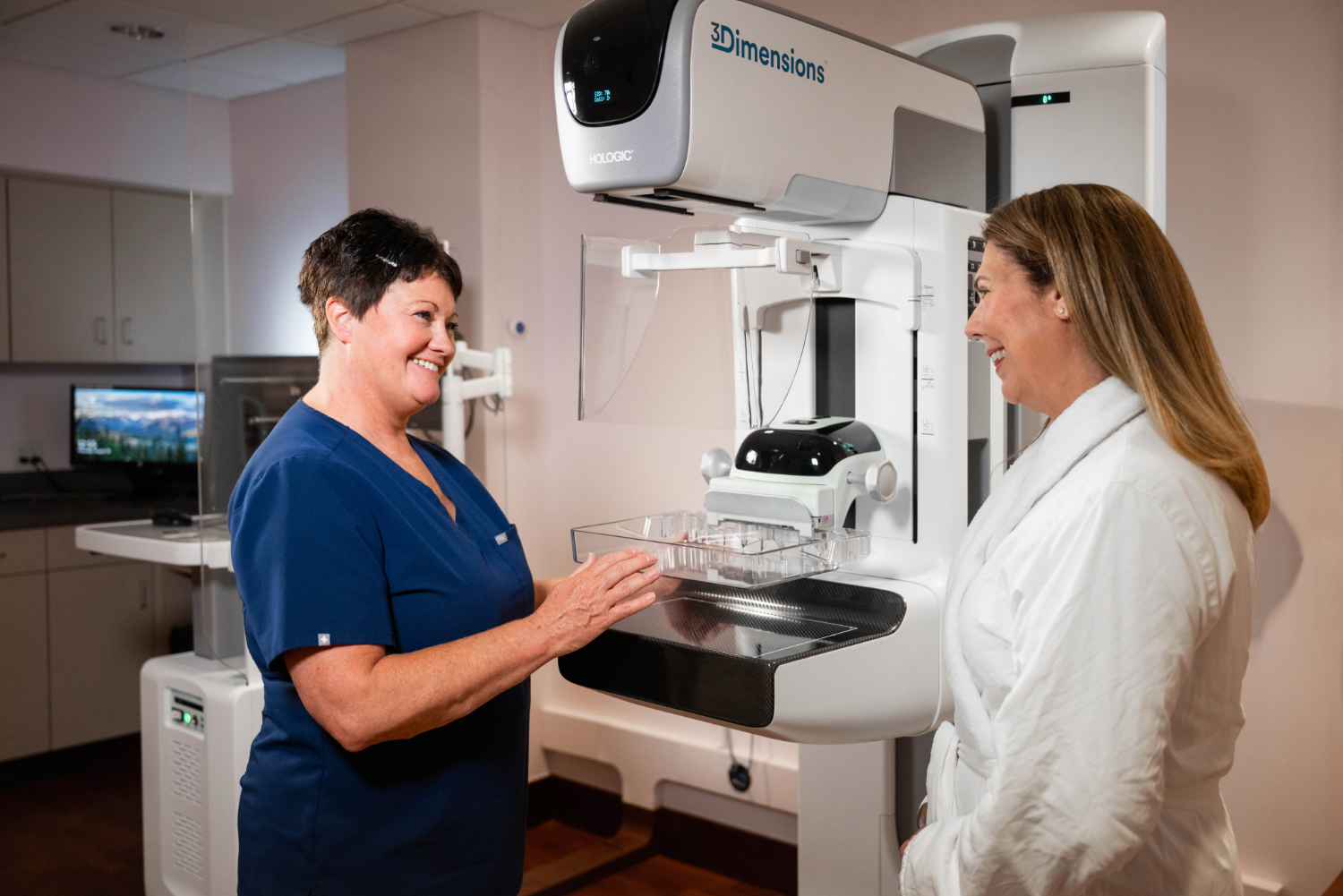




Knowledge is Power: One Woman’s Proactive Breast Health Journey

Breast cancer is the most common cancer women experience, and yet, as Vail Health breast surgeon Dr. Stephanie Miller notes, most cases appear without any clear reason. “What we know is that for the majority of women, their development of breast cancer is considered spontaneous disease, just by nature of being women, having breasts and getting older,” she says.
Still, some women do face factors that meaningfully elevate their risk, from dense breast tissue to a strong family history of the disease. Only about 10% of breast cancers are tied to a known genetic mutation. And even among those who carry a mutation, BReast CAncer (BRCA) genes account for only about half of those cases, the rest come from other, lesser-known genes. Each mutation carries a different level of risk, which is why, Dr. Miller says, genetic testing and counseling matter even if someone tests negative for BRCA.
For women with dense breast tissue, a family history or previous abnormal biopsies, understanding the risk, and navigating the worry that comes with it, becomes a journey of its own. That’s exactly where Edwards resident, Cynthia Pillsbury, found herself in the years after losing her mother, Louise, to breast cancer in 2016.
Cynthia’s Story
An only child who was deeply close to her parents, Pillsbury was intimately involved in her mother’s cancer experience, one that was both medically complex and emotionally devastating. Louise’s lobular cancer, which “grows fingers” and can hide in imaging, was missed on mammograms. She ultimately faced both lobular and ductal cancer, underwent treatment, and lived in remission before the disease metastasized to her bones seven years later. At the same time, a close friend of Pillsbury’s was also diagnosed. “How is this happening?” she remembers thinking.
Pillsbury’s parents underwent comprehensive genetic counseling, and that, combined with her family history and dense breast tissue, put her own risk of developing breast cancer at 33%, a number that struck her as unacceptably high (Dr. Miller notes that a lifetime breast cancer risk of 20% or more is considered high-risk).
“My immediate reaction was, OK, I’m a little higher than average, but it was still too high for me,” Pillsbury says. The recommended protocol, mammogram, ultrasound, then MRI, created a near-constant loop of imaging every few months. “It was a vicious cycle. I remember thinking, ‘I cannot live like this. This is not healthy,'” she says, recounting the anxiety. Pillsbury had also watched how breast cancer evaded detection in her mother. She knew her own anxiety wasn’t going to resolve through continued surveillance alone.
At UCSF, her care team, a surgeon, oncologist and plastic surgeon she trusted, validated her concerns immediately. She remembers walking into an appointment saying, “I don’t think I have breast cancer, but I can’t live like this.” Their response grounded her decision: You’re doing this for the right reasons. With their support, she pursued a prophylactic double mastectomy at age 42.
“I was 100% in when they said I was a good candidate,” she says.
Pillsbury’s surgery took place in November 2018, two years after her mother died. Her children were 7, 9 and 12. Recovery felt far less overwhelming than she’d feared. “You have drains, but the idea of it is so much scarier than the reality of it,” she says. She underwent reconstructive surgery that January and was skiing in Vail by February. While everyone experiences recovery differently, Pillsbury says, “I’ll never look back.”
Knowledge is Power
When she moved to the Vail Valley the following year, Pillsbury assumed she’d left behind the level of specialty care found at a major academic hospital. She quickly learned that wasn’t the case. “I had no idea the depth of care we have here,” she says. While her mastectomy means that she no longer requires regular mammograms, her continued involvement, as a patient, a community member and now a member of the Vail Health Foundation Board, has reaffirmed the importance of comprehensive, whole-person care.
“I want the community to have the resources to achieve their full health,” she says.
Dr. Miller agrees that personalized care is essential, especially for those with elevated risk. High-risk screening, she says, is meant to “help women who know their history to not feel crippled by it.” For women with strong family histories, dense breasts, previous biopsies or known genetic mutations, mammography alone may not be enough. Current research suggests that supplemental MRI is a helpful diagnostic tool.
And for some women, preventive options, from anti-estrogen medications to prophylactic mastectomy, offer a sense of stability they can’t find through surveillance alone. For Pillsbury, shedding the emotional weight of uncertainty was a game-changer.
“It’s scary, but information is power,” she says. “You can be your advocate, and if you know you’re at an X risk and that doesn’t feel comfortable to you, then you can take matters into your own hands.”
Proactive Breast Health: Steps You Can Take
For all women:
- Begin annual mammograms at age 40.
- Know your family history. Both maternal and paternal histories matter, and cancers such as ovarian and prostate can also signal increased risk.
- Understand your breast density. It’s a radiographic finding, not something you can feel, and dense tissue can both increase risk and obscure mammogram results.
- If something feels off, advocate for additional imaging.
- Prioritize whole-body wellness and stress reduction.
If you’re high-risk:
- Ask your provider for a formal risk assessment (family history, density, genetics).
- Consider genetic counseling/testing.
- Discuss MRI and mammogram screening , medication or surgery.
- Explore all risk-reduction options. These may include lifestyle changes or, for a small subset of women, preventative surgery.
- Connect with Shaw Cancer Center’s High Risk Breast Clinic for individualized planning.
- Stay engaged with your care. Whether through your primary care provider or the Shaw Cancer Center, early conversations lead to better clarity and less fear.