


News
Eagle County Super Kid Davis Hermes
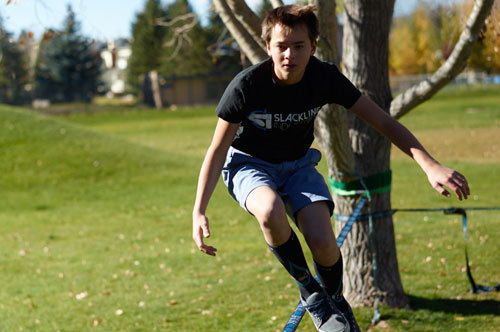
Just one look was all it took for Davis Hermes to determine his future: slacklining. For those not familiar with the sport, think tightrope walking on loose webbing. Add a few back flips, knee drops, chest and butt bounces, and you'll begin to imagine the incredible balancing act of this young athlete. The 16-year-old witnessed the sport at the GoPro Games in Vail four years ago.
He convinced his mom, Amy, to buy a slackline and then proceeded to spend hours a day, every day, teaching himself how to walk across the line. From there, he progressed to doing tricks.
Starting out, Davis says, is "really hard because the slackline is an unpredictable surface. Your body is used to a predictable surface where your muscles know how to react. Your muscles have no idea of what is going on and your legs are going to shake back and forth."
After falling in love with the sport of slacklining, he progressed to highlining- basically slacklining at elevation above the ground or water. Sometimes that's way above ground - 400 feet or so, which was the height of Davis's first highline in Moab, UT.
Amy admits to being terrified watching her then-12-year-old son walk a highline for the first time. "I was thinking, "Is this neglectful parenting?'" she says, laughing. "But it is safe: You are harnessed in so if you fall you don't go plummeting to the ground, and it brings me joy to see him do this. Highlining is really where he shines and it is a testimony to his talent. "I chose to nurture it rather than fight it," she sagely adds.
Amy, a former mountain bike racer, also inspires her son. "I can see she was always very determined and I can tell she was passionate about mountain biking so she inspires me in general," he says.
At 15, Davis was one of the youngest competitors in the GoPro Games last summer in Vail. As there are no age brackets, he was competing against slackliners in their 20s, but that is not a hindrance. "I'll compete against whoever they put me up against," he says.
Davis currently competes four to five times a year and in the future he'd like to compete internationally. In the interim, he is determined to start a slacklining club in the valley to introduce others to the sport. And while that is in the works, Davis has found other ways to give back. He went on a church mission to Argentina and helped build playgrounds in Indian neighborhoods.
Taken in context with his determined nature, his high hopes for the future seem very down to earth.
"Starting out is really hard because the slackline is an unpredictable surface. Your body is used to a predictable surface where your muscles know how to react."
More News
-
More
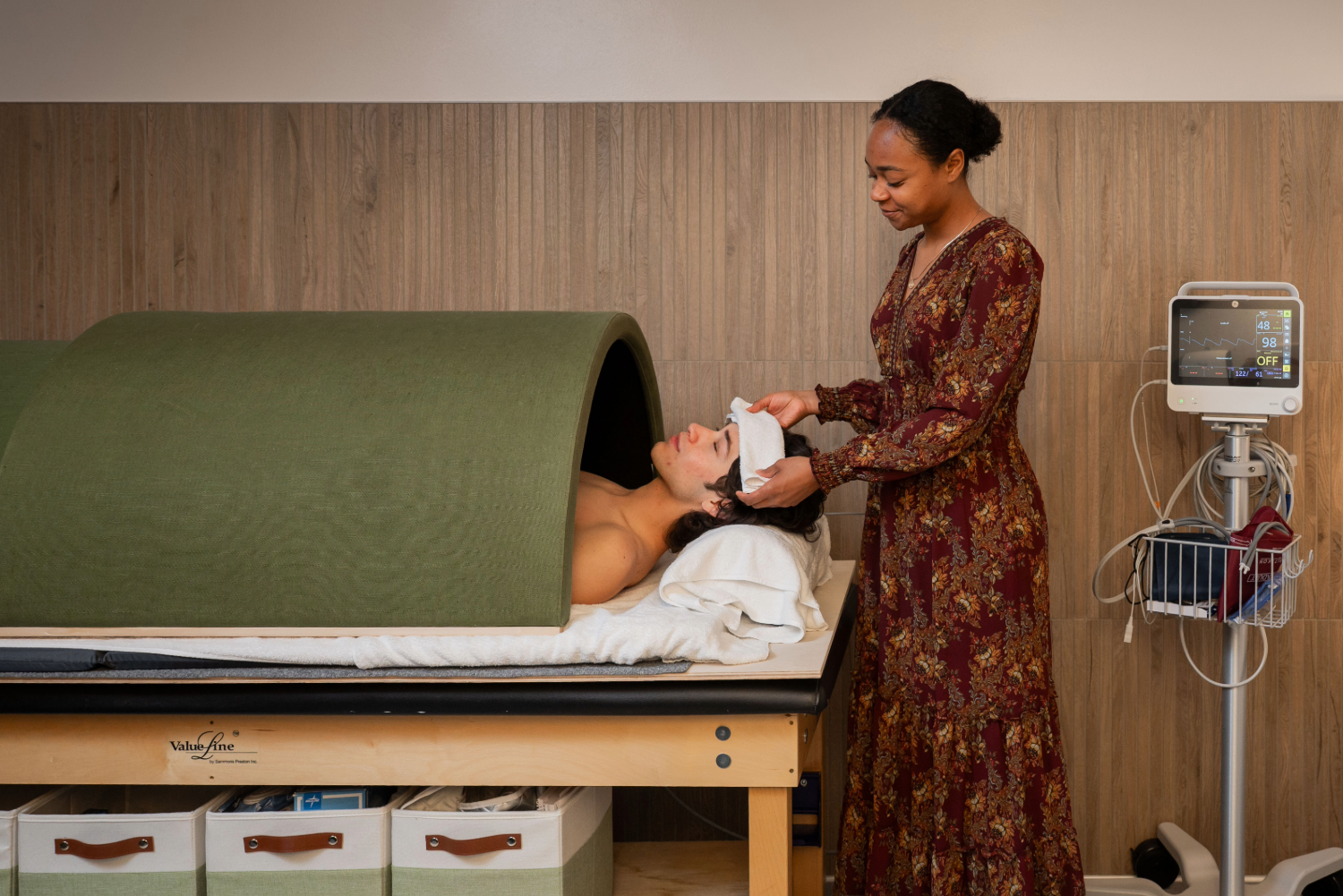
Hot, Cold and Mental Health: Inside Vail Health’s CHILL’D Research Study
Depression, a mental illness affecting more than 18% of American adults, has no blood marker or single biological cause. It looks and feels different in everyone because the brain is a complex organ, and there is no single way that depression develops. Like many mental health conditions, depression can be treated through medical, pharmaceutical and alternative approaches. One promising avenue under study at Vail Health’s Behavioral Health Innovation Center is contrast therapy — combining sauna and cold plunge treatments.
-
More

What to Expect Before, During and After a Colonoscopy
If you've been putting off a colonoscopy, you're not alone. It's one of the most recommended — and most avoided — preventive screenings in medicine. But here's what most people don't realize until after their first one: the procedure itself is a non-event. You're asleep. You don't feel a thing. What people actually dread, and what they talk about afterward, is the prep. The good news is that even the prep is manageable, and the payoff is enormous. Colorectal cancer is one of the most preventable cancers when caught early. A colonoscopy doesn't just detect it; in many cases, it stops cancer before it starts.
-
More

Navigating Men’s Sexual Health: Erectile Dysfunction and the Bigger Picture
For something so common — and treatable — erectile dysfunction (ED) is still surprisingly difficult to talk about. “The biggest misconception men have is that there’s a mechanical or physical problem with them, and that’s usually not the case,” explains Dr. Joseph Dall’Era, a urologist at Vail Health. In reality, ED is far more nuanced and manageable than people realize. Understanding what’s happening and knowing when to speak up can shift the experience.