


News
Eagle County outlines shift for COVID-19 testing
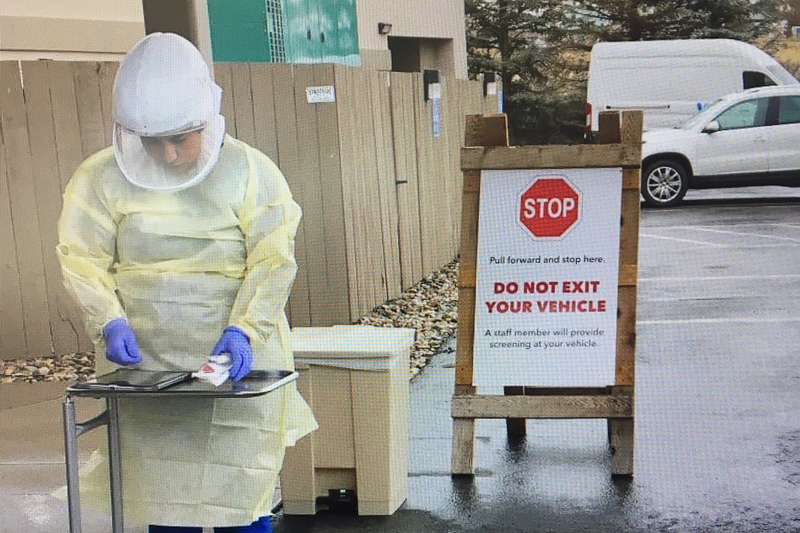
This article was first printed in the Vail Daily on March 16, 2020.
Watch Chris Lindley's video address →
EAGLE COUNTY — With a new week dawning and Eagle County residents hunkering down to meet the local COVID-19 scenario, Eagle County Public Safety is stressing there has been a change in response focus.
With community-level transmission, the testing and screening guidance is shifting.
“Now that we have rapidly identified the arrival of COVID-19 in our community, our focus is to slow the spread of the virus, protect our medical infrastructure, and protect the most vulnerable people in our community,” said Eagle County Director of Communications Kris Widlak. “Testing all patients with mild symptoms of COVID-19 is no longer recommended. A key priority is to shift our testing to people that are at greatest risk for severe disease, complications, and death.”
“With limited testing resources, Eagle County is prioritizing testing for high-risk patients only,” said Rebecca Larson, Eagle County Disease Prevention and Control manager. “This means that the number of lab-confirmed tests may not reflect the true spread of the COVID-19 virus in our county. To help us track the virus spread, we need the community’s help. If you or a loved one are experiencing symptoms that could be related to the COVID-19 virus, including headache, fever, cough, or other respiratory symptoms, please fill out our survey.”
You can fill out a symptoms report form here.
Being proactive
The Colorado Department of Public Health and Environment on Sunday issued a statement asking residents and visitors to Eagle County, and three other mountain communities, to “minimize their contact with other people” in an effort to slow the spread of COVID-19.
“Anyone who has been in Eagle, Summit, Pitkin or Gunnison counties in the past week should minimize all contact with other people, whether or not they are experiencing symptoms,” the statement said.
Eagle County now has 25 presumed positive cases of COVID-19, the second-most among Colorado counties. The Centers for Disease Control and Prevention says all presumptive positive cases are now considered positive. CDC is no longer performing confirmatory testing.
“We’re seeing extensive outbreaks in these communities,” Dr. Rachel Herlihy, the state epidemiologist, said in a written statement. “We are asking people to take this voluntary action to slow the spread of the disease in Colorado and keep people safe. If we do this now, our hope is that we can slow down the spread of this virus and lessen the potential stress on our health care systems and workers.”
One of the reasons Eagle County may have so many confirmed cases is because it has done so many tests. According to Vail Health, it has sent more than 400 samples to the state lab, with more than 200 results still pending.
Sally Welsh, Vail Health’s director of public relations, wrote in a text that Vail Health’s assessment is that Eagle County has submitted more samples, per capita, than any county in the state.
Vail Health has begun to send tests to private commercial labs as well, given that turnaround times on tests to the state lab have slowed considerably as more tests arrive.
Symptoms of COVID-19 are fever of 100.4 degrees or higher, cough, or shortness of breath.
Those who are experiencing symptoms but are not getting tested are asked to self-report symptoms at https://bit.ly/39XFRne. Widlak urged residents to self-report because the information will provide local officials with data about community spread.
Highest priority
The following patients with COVID-19 symptoms are considered at the highest priority for testing:
- Health care workers
- Employed in public safety occupation (e.g., law enforcement, firefighters, EMS)
- Part of an illness cluster in a facility or institution (e.g., health care, school, corrections, shelters)
- With severe lower respiratory illness (hospitalized or fatal)
- With worsening symptoms
- Older than 60 years
- With underlying medical conditions
- Pregnant women
- Anyone who has contact with a lab-confirmed COVID-19 patient
- Any other patients can be tested per health care provider judgment.
“There isn’t a vaccine and there isn’t a cure,” she said. “Stay home if you are sick and stay hydrated.”
More News
-
More
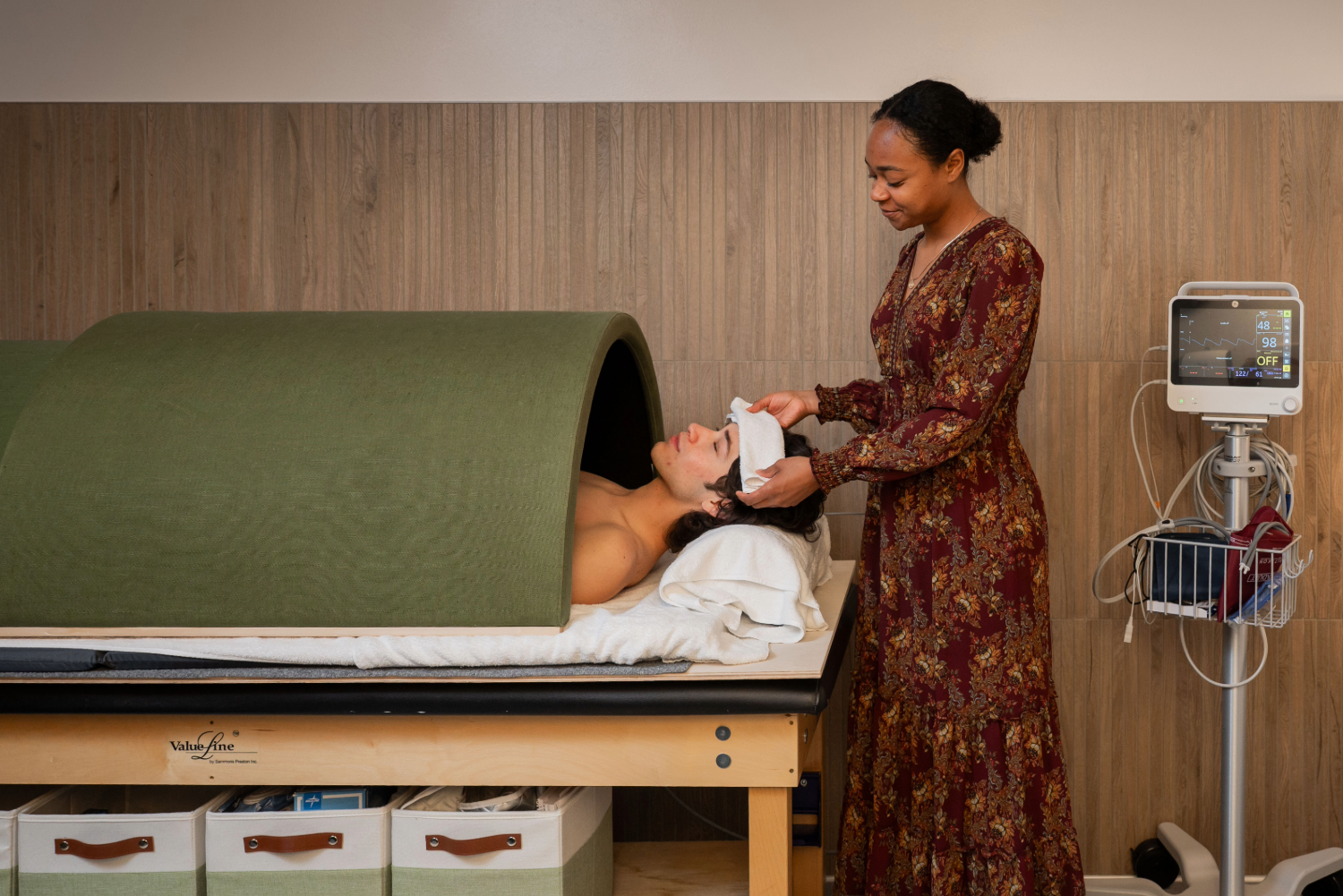
Hot, Cold and Mental Health: Inside Vail Health’s CHILL’D Research Study
Depression, a mental illness affecting more than 18% of American adults, has no blood marker or single biological cause. It looks and feels different in everyone because the brain is a complex organ, and there is no single way that depression develops. Like many mental health conditions, depression can be treated through medical, pharmaceutical and alternative approaches. One promising avenue under study at Vail Health’s Behavioral Health Innovation Center is contrast therapy — combining sauna and cold plunge treatments.
-
More

What to Expect Before, During and After a Colonoscopy
If you've been putting off a colonoscopy, you're not alone. It's one of the most recommended — and most avoided — preventive screenings in medicine. But here's what most people don't realize until after their first one: the procedure itself is a non-event. You're asleep. You don't feel a thing. What people actually dread, and what they talk about afterward, is the prep. The good news is that even the prep is manageable, and the payoff is enormous. Colorectal cancer is one of the most preventable cancers when caught early. A colonoscopy doesn't just detect it; in many cases, it stops cancer before it starts.
-
More

Navigating Men’s Sexual Health: Erectile Dysfunction and the Bigger Picture
For something so common — and treatable — erectile dysfunction (ED) is still surprisingly difficult to talk about. “The biggest misconception men have is that there’s a mechanical or physical problem with them, and that’s usually not the case,” explains Dr. Joseph Dall’Era, a urologist at Vail Health. In reality, ED is far more nuanced and manageable than people realize. Understanding what’s happening and knowing when to speak up can shift the experience.