




Nerve Blocks: Alternative Pain Relief
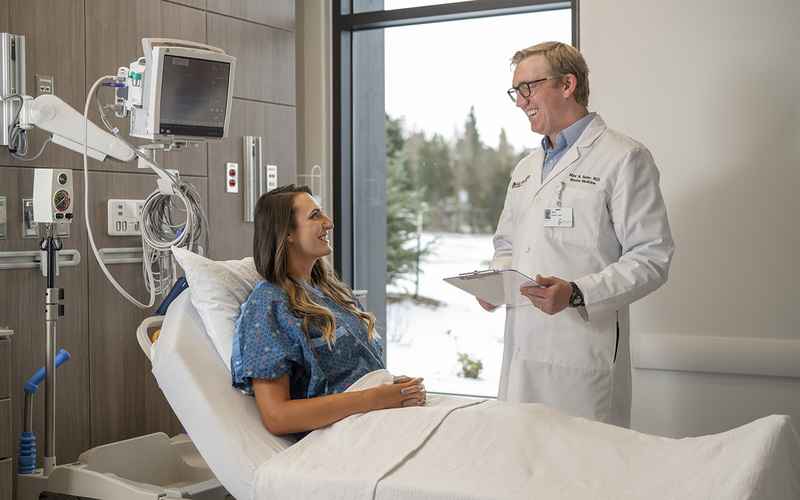
Pain is typically an inevitable side effect of surgery. However, Vail Health’s Acute Pain Service team is using nerve blocks in diverse ways to reduce pain, limit the need for opioid medications and send patients home sooner.
Nerve blocks use medications that are injected near a targeted nerve or group or nerves to provide temporary pain relief. Nerves are part of the nervous system, and function like train tracks that deliver electrical signals to your brain and back to various parts of your body. When these signals are impaired by the medications in a nerve block, also known as regional anesthesia, pain can be decreased or even eliminated.
Nerve blocks can be used as anesthesia during surgery, as a one-time injection for pain relief lasting 12-16 hours, or they can be left as an indwelling block that can provide pain relief for up to seven days. Peripheral nerve blocks are used to decrease sensation in an arm or leg. Other types of nerve blocks, such as the erector spinae block, can be useful for decreasing pain in spine, breast or abdominal surgeries.
Dr. David Ruttum, an anesthesiologist with Anesthesia Partners of Colorado, formed the Acute Pain Service team at Vail Health in 2011 and has been driving the use of nerve blocks ever since. Shoulder surgeries are a common procedure that utilize this type of anesthesia, but they are also used in foot, ankle, total knee, hand and even some spine surgeries.
After a procedure, the anesthesiologists and acute pain nurses are available 24/7 to help patients with their pain management after surgery. “Nobody in Colorado does this as often as we do, and many don’t even do it,” said Dr. Ruttum.
Dr. Ernest Braxton, a neurosurgeon at Vail-Summit Orthopaedics & Neurosurgery, frequently uses nerve blocks for spine surgeries, such as transforaminal lumbar interbody fusions. In Braxton’s experience, the recovery is faster with regional anesthesia.
“I think that patients have a lot more satisfaction with surgery,” said Dr. Braxton. “There is less fear going into it, and they are using fewer narcotics after.”
Decreasing the amount of opioids that patients use is one main advantage of using nerve blocks. According to the Center for Disease Control and Prevention, prescription opioid use comes with many risks, including constipation, tolerance, physical dependence and respiratory depression. Patients cannot always avoid taking these medications, but with the help of Acute Pain Services, their use is decreased post-operatively. When talking about ways to achieve pain management, it helps to think of all the available interventions as a toolbox. Nerve blocks can be a big part of this toolbox, along with over-the-counter medications like acetaminophen (Tylenol) and narcotics like oxycodone, as well as ice, heat, distraction techniques, breathing techniques and movement.
As with any medical procedure, nerve blocks do have some possible risks and disadvantages that you will discuss with your surgeon and anesthesiologist prior to surgery. There is about a 2-3 percent failure rate with nerve blocks, and bleeding, infection or irritation at the injection site are possible. Many nerve blocks numb the sensation as well as the muscles, sometimes making the limb difficult to move or creating a sensation that is unfamiliar to patients. Another downside is that the patient is tethered to a small pump that they must carry with them, which can make moving around more complicated for some patients.
A recent rotator cuff repair patient went home the same day from surgery with a nerve block that was left in for two days. The Acute Pain Services team used a block to decrease the patient’s oxycodone use and to help the patient better participate in physical therapy. The patient commented, “The two days of carrying around a nerve block pump were well worth the pain relief in the hardest part of recovery.”
Dr. Ruttum is proud of Vail Health’s Acute Pain Service program, and says it rivals any world-class pain management service.
“We offer the best experience in pain management-not to say you won’t have pain, but we will minimize your pain and use non-opioid pain medication to make you comfortable and allow you to start physical therapy the same day,” said Dr. Ruttum.
“It’s a unique service that is really only available here in Vail,” said Braxton.