


News
Dr. Tom Hackett Just What U.S. Snowboarding's Olympic Team Ordered
It was only 11 days after shoulder surgery when snowboarder Nate Holland raced in the Lake Louise snowboardcross World Cup competition where he placed seventh. Two weeks later in Spain he placed fourth. Just six weeks after the surgery the two-time Olympian was a Winter X Games gold medalist.
"To come here and do this to win at X Games is huge for my confidence and for riding. I'm looking forward to throwing one down the barrel in Sochi and beating the world" said Holland who was fourth at the Vancouver Olympics in 2010. "I'm going in guns blazing."
Holland's rapid recovery to top-tier racing is both a testament to his strength and conditioning as well as to the talent of his surgeon Dr. Tom Hackett.
Hackett an orthopedic surgeon at Vail's renowned Steadman Clinic is the chief physician for U.S. Snowboarding's Olympic team. He estimates that he has worked with 22 athletes who will be competing at the Sochi Olympics which start this week.
The former ski patroller knows athletes such as Holland and alpine ski racer Lindsey Vonn will push harder than ever to rebound from injuries and surgeries as the Olympics loom.
"During an Olympic year the stakes are high for everybody and that includes us as well" Hackett said. "Everyone talks about that word 'progression.' Progression doesn't just involve the athletes but everyone who takes care of those athletes. My surgical skills have had to progress to keep up with these guys and get them back faster. It's been a challenge to take care of some of these guys who want to get back to what is essentially an extreme sport. So in the operating room I take an aggressive approach to fixing some of the problems that these guys get with their bones and tendons and ligaments.
"I try to go as hard as they do in the operating room to get them back. That means being more aggressive surgically. Myself and my partners here in Vail have really pushed the envelope in our surgical techniques."
Hackett recently set up cameras in the halfpipe and stickered top snowboarders and skiers with reflectors to conduct a motion analysis of their runs. His study shows increasing stress on joints and ligaments as the athletes try bigger and more complicated tricks. The study has helped Hackett devise strategies aimed at strengthening certain muscles to prevent injuries. He calls it "fine tuning their training."
That's just another part of Hackett's service to the world's top winter athletes. He left last week for Sochi helping safeguard and prepare athletes for competition in what essentially is several weeks of unpaid vacation.
"I lose a lot of money on these deals" said the chief physician for the U.S. Ski Team in the 2010 Vancouver Olympics. "But I love it. It really is an honor. It's almost a national service the way I look at it. I'm not in the Army or Navy and I haven't served in Afghanistan but this is a way I can provide a service to my country."
More News
-
More
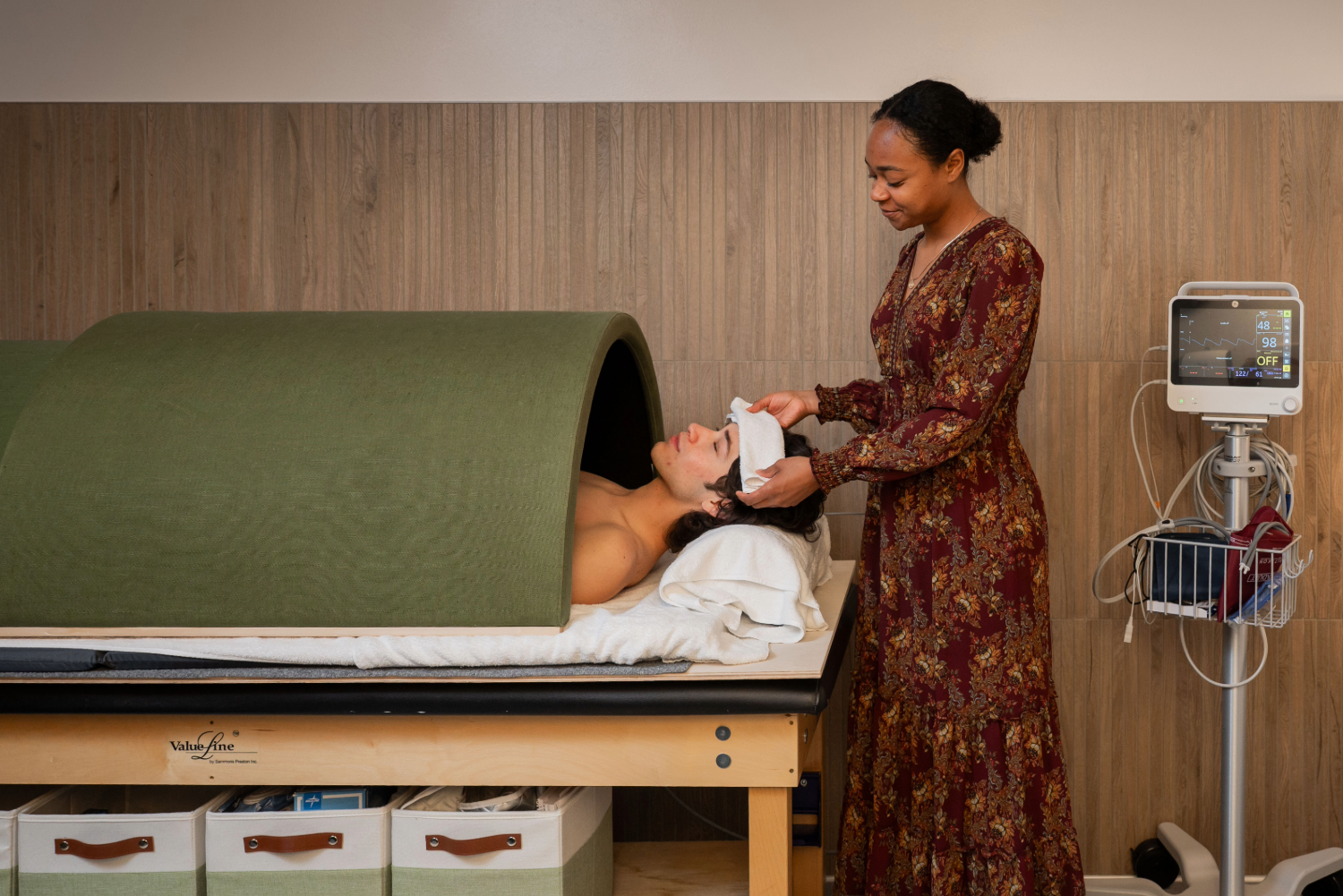
Hot, Cold and Mental Health: Inside Vail Health’s CHILL’D Research Study
Depression, a mental illness affecting more than 18% of American adults, has no blood marker or single biological cause. It looks and feels different in everyone because the brain is a complex organ, and there is no single way that depression develops. Like many mental health conditions, depression can be treated through medical, pharmaceutical and alternative approaches. One promising avenue under study at Vail Health’s Behavioral Health Innovation Center is contrast therapy — combining sauna and cold plunge treatments.
-
More

What to Expect Before, During and After a Colonoscopy
If you've been putting off a colonoscopy, you're not alone. It's one of the most recommended — and most avoided — preventive screenings in medicine. But here's what most people don't realize until after their first one: the procedure itself is a non-event. You're asleep. You don't feel a thing. What people actually dread, and what they talk about afterward, is the prep. The good news is that even the prep is manageable, and the payoff is enormous. Colorectal cancer is one of the most preventable cancers when caught early. A colonoscopy doesn't just detect it; in many cases, it stops cancer before it starts.
-
More

Navigating Men’s Sexual Health: Erectile Dysfunction and the Bigger Picture
For something so common — and treatable — erectile dysfunction (ED) is still surprisingly difficult to talk about. “The biggest misconception men have is that there’s a mechanical or physical problem with them, and that’s usually not the case,” explains Dr. Joseph Dall’Era, a urologist at Vail Health. In reality, ED is far more nuanced and manageable than people realize. Understanding what’s happening and knowing when to speak up can shift the experience.