



First Chair to Last Call: What Does Alcohol Really Mean For Your Health?
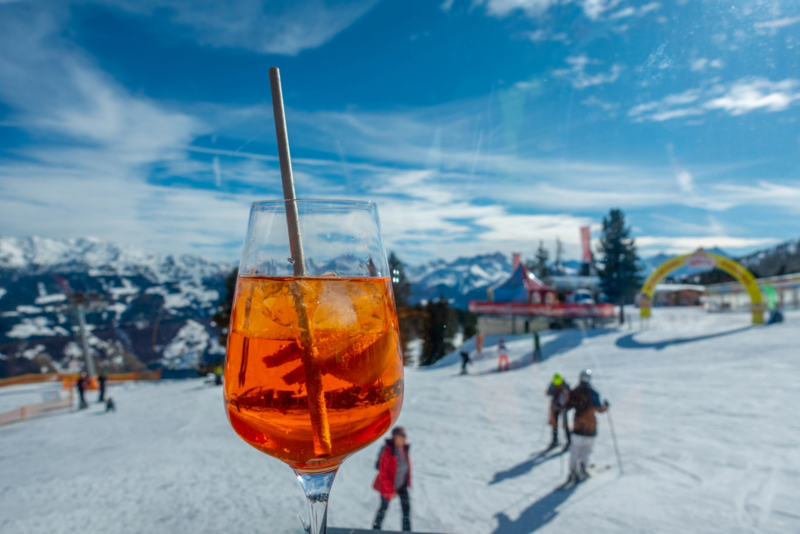
In nearly every Colorado ski town, some iteration of the neon sign blares its play-hard-party-harder anthem. It’s a not-so-subtle nod to mountain party culture, a lifestyle that normalizes combining sports and outdoor adventures with heavy drinking and partying.
In Eagle County, après culture, high-altitude living and outdoor performance have coexisted for as long as locals have been sliding on snow. But how much is too much at altitude? And what role do social support systems play in helping residents find balance?
Vacation Mode Mentality
Alcohol and other party drugs have become synonymous with a ski vacation. When you live in a Colorado ski town, it’s easy to slip into that culture and become a daily drinker without realizing it, says Vail Health Behavioral Health nurse practitioner Joe Drew, who specializes in addiction psychiatry.
“It is not uncommon for people from middle America to take a vacation to Mexico for an all-inclusive and consume alcohol daily while on vacation,” Drew says. “When they return home, they return to the ‘normal’ of drinking only on weekends or special occasions. Here, in our mountain ski towns, we live in the all-inclusive.”
Once that habit is set, it can become difficult to break. And asking for help can be even more of a challenge.
Oftentimes, Drew’s Eagle County clients want to change their relationship with alcohol, but prefer to do it alone, in secret. After seeing so many struggle on their solo paths to sobriety, Drew says social connection and support are vital to the journey.
“The opposite of addiction is not sobriety, but connection,” he says. “Asking for help or support is not a sign of weakness. It shows strength. We are all humans and in need of grace.”
Drew points to local groups, like RECONNECTED Foundation, that organize sober social activities such as skiing, biking, hiking and rafting.
Your Body + Booze
When it comes to alcohol consumption, the less the better, says Vail Health nutritionist Jen Sommer-Dirks.
“My recommendation as a healthcare provider is to limit alcohol to one to two drinks per week max,” she says. “If this sounds unrealistic, that is because alcohol is hard-wired into our après culture and considered socially acceptable. Committing to a lower level of alcohol use in this environment might take some real intention.”
Sommer-Dirks debunks the myth that a glass of wine a day keeps the doc away, pointing to new evidence suggesting a link between alcohol and cancer risk. Alcohol is also a diuretic, meaning it dehydrates your body, she says, something that comes with its own set of acute and long-term health impacts, especially at altitude.
In terms of nutrition, alcohol can interfere with the absorption of nutrients like iron and folate, which support oxygen transport in the body – another high altitude no-no. Hard liquor throws a harmful wrench in our gut’s natural bacteria, irritating the lining and encouraging overgrowth of harmful bacteria that can, in turn, affect the immune system, hormone production, mood and mental health.
Finally, Sommer-Dirks says, don’t be fooled into thinking wine or beer are “lesser evils” when it comes to drinking. “It is important to note that all types of alcohol can have negative health impacts,” she says.
A Broader Cultural Shift
While there’s a palpable move away from alcohol consumption in the U.S. – think mocktail menus, sober support tables at concerts and annual Dry January and Sober October challenges – Eagle County is seeing a painfully slow ease into that cultural shift, says Rob Shearon, a recovery and wellness coach at RECONNECTED Foundation.
Shearon grew up in Vail where, he says, one in five people will struggle with addiction. Alcohol flows steadily as a mountain town social lubricant, greasing the meet-up wheels at fundraisers, après gatherings and even competitive races and morning events.
“I don’t think alcohol is bad,” says Shearon, who has been in recovery since 2013. “Alcohol has been that bonding connective piece for so long. Now, we need to ask ourselves: what are some sober ways we can connect?”
Shearon founded RECONNECTED in June 2023, helping others find connection on their recovery journeys through events that include weekly happy hour pickleball and community yoga meetups. A common concern among the sober-curious, he says, is feeling awkward on dates or having friends think you’re no longer fun because you’ve stopped drinking.
“You could tell that friend, ‘Well, you’re no fun when you’re hungover and you can’t even meet up to bike at 8 a.m. You’re just bitching the whole time about your hangover,'” Shearon chuckles.
Part of pushing Eagle County’s needle a little further to the sober side will need to involve normalizing not drinking in social situations. In a health-conscious mountain community, Shearon says, it should be as normal not to order a cocktail at happy hour as it is to decline dessert after dinner.
“The general population doesn’t know how to act around people who are making this lifestyle shift,” he says. “They may feel weird being a little tipsy around you now. That’s probably just them projecting their own relationship with alcohol. It will get easier over time.”
Citrus Glow Mocktail
Ingredients
- ½ cup freshly squeezed orange juice
- ¼ cup freshly squeezed grapefruit juice
- ¼ cup chilled club soda
- 1 orange and/or grapefruit slice, for garnish
- Optional: ¼ cup of Three Spirit Livener
Instructions
- Fill a glass with ice.
- Pour in the orange and grapefruit juices and stir gently. Add the Three Spirit Livener, if using, for a botanical boost.
- Top with chilled club soda.
- Garnish with citrus slices.
- Sip and enjoy the bright, refreshing balance of sweet and tart.