



The Basics About Cortisol: What Spikes It and Why It Matters
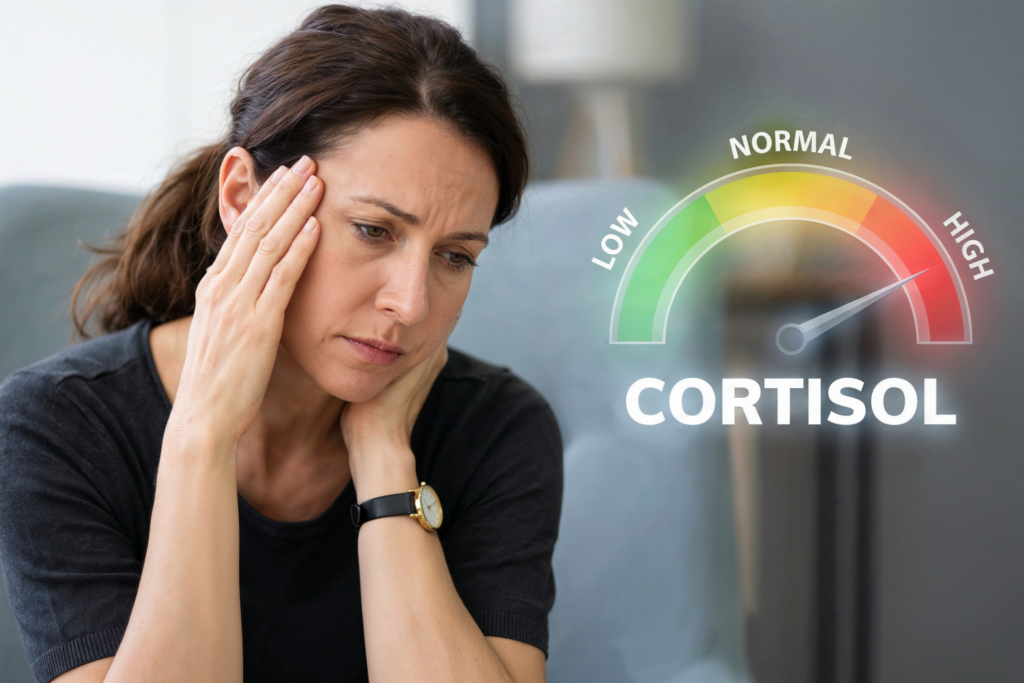
Wellness jargon often deems cortisol as a health inhibitor, but this is not the full truth. Cortisol is not the enemy — the body produces the hormone on purpose. Too much or too little of anything in the body is not ideal for overall health. The goal is not to eliminate cortisol; it’s to maintain balance.
What is Cortisol?
Cortisol is a necessary hormone produced in the adrenal gland. Dr. JerriLu Atkins, family physician with Colorado Mountain Medical, says the hormone is a vital regulator, working across many systems in the body to regulate immune function, cardiovascular function, apatite, sleep, energy, libido, metabolism and stress response. She emphasizes that cortisol, like all the hormones in the body, does not work in isolation.
“Almost everything is bidirectional,” Atkins says. “Cortisol is necessary for human life. If the cortisol is out of whack, it is going to impact other hormones as well.” Additionally, what can spike cortisol levels, such as chronic stress and lack of quality sleep, can also be elevated or suppressed by cortisol.
Sleep and Cortisol
The body naturally produces cortisol aligned with the circadian rhythm. Ideally, when cortisol is balanced in the body, levels are high in the morning, naturally spike and dip throughout the day to respond to life and lower at night to cue the body that it is time to sleep. When cortisol levels are higher than balanced at night, the body does not sleep or recover optimally.
The body knows what to do without you telling it. Atkins recommends to follow the body’s natural circadian rhythm, maintaining lower cortisol levels at night and higher levels in the morning. This means consistently waking up with the sun, as cortisol levels rise, and going to sleep when levels decrease, rather than “doomscrolling” late into the night.
Chronic Stress and Cortisol
“We want enough cortisol in our system to respond to a healthy amount of stress,” Atkins assures.
Apart of being alive is dealing with everyday stressors, but the body is not meant to continually be under chronic stress. For example, if you are running late for a meeting or startled by a dog bark, cortisol levels will naturally rise and then fall. But the body is not meant to always feel like life is at stake. The body does not know the difference between missing a deadline or being chased by a bear. If you are in a constant state of stress, cortisol levels will not rise and fall but remain elevated, above balanced. Atkins says this is called the “adaption phase.” Inevitably, levels will lower and stay suppressed below balance, where cortisol levels are depleted. Atkins says the body transitions into burnout called the “exhaustion phase.”
“Chronic stress becomes synonymous with cortisol dysregulation,” Atkins says. “A normal homeostatic stress response is vital and important.” When cortisol is dysregulated, the body cannot naturally respond to everyday stressors, the body becomes inflamed and cortisol does not follow the flow of the circadian rhythm.
High Cortisol or Dysregulated Cortisol Symptoms:
- Low blood pressure
- Dizziness
- Depression
- Menstrual dysregulation for women
- Poor concentration
- Brain Fog
- Acne
- Hair loss
- Rashes
- Sleep disruption
- Anxiety
- Blood sugar dysregulation
Cortisol and Blood Sugar
Balanced blood sugar is a sign of balanced cortisol.
“Cortisol will increase in response to both high blood sugar and low blood sugar,” Atkins says. “And when it is responding to low blood sugar, it triggers the liver to release more glucose into the blood stream. When cortisol responds to high glucose in the blood, it will increase through different proinflammatory pathways.”
Atkins recommends prioritizing whole foods, fruits and vegetables that are high in fiber, vitamins and minerals while limiting processed foods, simple carbohydrates, saturated fats and added sugars.
The Truth About High Intensity Interval Training (HIIT)
The goal of HIIT training is to raise and lower the heart rate, and, thus, naturally raise and lower cortisol levels. This rise and fall of cortisol levels is a microcosm of what a balanced body does on a daily basis.
Atkins recommends HIIT workouts two days a week for cortisol balance. She emphasizes HIIT training is different than overtraining syndrome, where the body is overworked and enters the adaption phase and then the exhaustion phase.
“We are meant to have the spikes,” Atkins says as she motions her hand to illustrate the natural rise and fall of cortisol levels. “We are just not meant to go up there and hang out up there or go down there and hang out down there. Hanging out down there is the biproduct of being up there for too long.”
How to Balance Cortisol Levels
- Spend time outside. Put your feet in the dirt.
- Hum
- Dance
- Drum
- Try contrast therapy (hot and cold modalities).
- Practice yoga, mindfulness and breathwork.
- Prioritize and regulate sleep.
- Limit sugar, caffeine and alcohol consumption.
- Eat the rainbow.
- Limit toxin exposure, both in the environment and in relationships.
- Avoid multitasking.
- Implement a gratitude practice to manage stress.
- Limit mindless screen time, especially in the evening and at night.
Atkins encourages readers to pick one or two of these practices to avoid becoming overwhelmed. “It takes a lot of intention to change the way we live,” Atkins says.
The providers at Colorado Mountain Medical, Vail Health Functional & Lifestyle Medicine, and Vail Healthspan are here to help you balance your cortisol levels and reach a state of homeostasis.