




Chocolate: Guilty Pleasure or Innocent Health Food
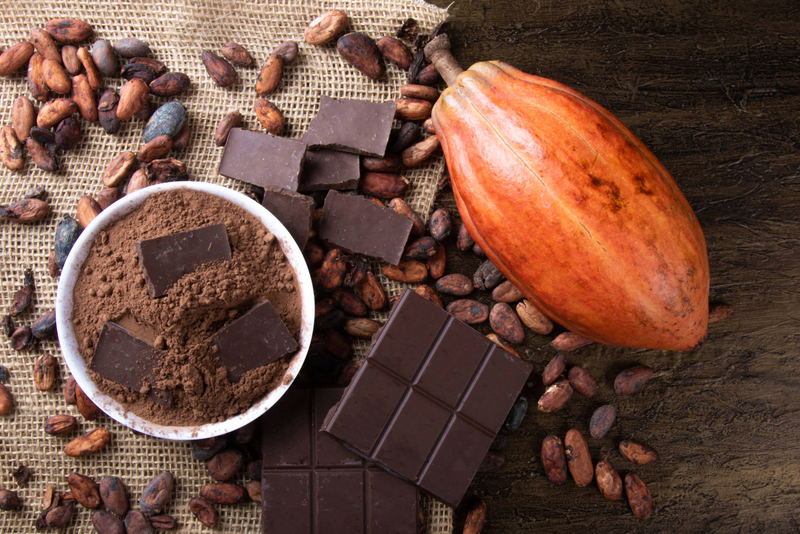
Chocolate may have a reputation for being a treat, but could it also be good for your health? Here’s the scoop on chocolate, its roots and how it can benefit your heart-without all the sugar and fat of most dessert foods.
Cacao is the raw bean from the cacao tree, while cocoa refers to roasted and processed beans that are usually devoid of fat and made into a powder. Solid chocolate typically contains sugar, cocoa butter and extracted cocoa solids, giving it a smooth texture and added fat. You can also buy “cacao nibs,” which are bitter, small, crunchy pieces of roasted cocoa beans.
Why Cocoa Powder is So Good for You:
- Lowers blood pressure
- Reduces bad cholesterol (LDL)
- Boosts good cholesterol (HDL)
- Keeps arteries flexible
- Enhances immune function
- Improves brain function and mood
Cocoa’s Heart-Healthy Powers:
- Cocoa, especially in its purest form (natural cocoa powder), can improve arterial function within hours of consumption.
- Regular cocoa consumption has shown long-term benefits, improving arterial health during weeks and months.
- Cocoa powder is rich in plant compounds called “flavanols,” which act like antioxidants to fight disease. Keep in mind, however, that adding sugar and fat (as found in many solid chocolate products) can counteract these benefits.
- Milk in chocolate reduces the antioxidant power of cocoa and can weaken its benefits. Dark chocolate is definitely the way to go!
- Look for desserts with a moderate portion of added sugars (5-7 grams per portion is a good guideline) and saturated fat (1 portion can amount to ½ your limit for the day).
Dark Chocolate vs. Milk Chocolate:
- Dark chocolate (>70% cocoa) has about three times the antioxidants of milk chocolate.
- Adding milk (in chocolate or alongside) cancels out the positive effects of cocoa in regard to its antioxidant activity and absorption in the bloodstream.
Natural Cocoa vs. Alkali-Processed (Dutch-Process) Cocoa
Between natural cocoa and alkali-processed (Dutch-process) cocoa, natural cocoa is the healthier option, as it retains more of its beneficial compounds. Dutch-Process cocoa has fewer phytonutrients than natural cocoa, but you can use more of it to get the same benefits. 1 tsp of natural cocoa = 2 tablespoons of Dutch-process cocoa.
Chocolate Milkshake Recipe
Want to enjoy cocoa while boosting your health? Try this delicious, nutritious, heart-healthy milkshake recipe from Dr. Michael Greger, a founding member and Fellow of the American College of Lifestyle Medicine. Dr. Greger is a physician, New York Times bestselling author, and internationally recognized speaker on nutrition, food safety, and public health issues.
Ingredients (makes 2 servings):
- 1/4 cup Dutch-process cocoa powder [most common in groceries or natural cocoa powder if avail]
- 2-4 pitted dates (for natural sweetness)
- 2 tablespoons flax meal
- 2 cups unsweetened plant-based milk (almond, oat, etc.)
- 1 cup frozen cherries
Instructions:
- Combine all ingredients in a blender.
- Blend until smooth and creamy.
- Adjust cocoa powder to taste.
Other Tips: steam cocoa powder into a plant-based milk latte, add to a smoothie, overnight oats or energy bites.
To sum it up, choose dark chocolate or natural cocoa powder to get the most health benefits. Watch for additives in “No Added Sugar” solid chocolates (i.e. erythritol, inulin, monk fruit, polydextrose, polyglycitol), which can cause stomach distress. Research suggests eating 20-40 grams/day of cocoa powder (2-4 Tbsp), two days per week. Keep in mind 2Tbsp cocoa powder = 25mg caffeine, 1 cup brewed coffee = 100mg caffeine. Avoid excess sugar and fat, as they can reduce cocoa’s positive effects on your heart. Limit added sugars to 25 grams per day (check the Nutrition Facts label). Limit saturated fat to 14 grams per day. Be aware that for some people, chocolate can trigger acid reflux or migraines. Enjoy solid cocoa moderation and savor cocoa powders for the heart-healthy perks!
Want to learn more? Watch Dr. Greger’s video on dark chocolate and arterial function: Dark Chocolate and Arterial Function.
Adapted article from Dr. Greger Nutritionfacts.org
- L Hooper, C Kay, A Abdelhamid, P A Kroon, J S Cohn, E B Rimm, A Cassidy. Effects of chocolate, cocoa, and flavan-3-ols on cardiovascular health: A systematic review and meta-analysis of randomized trials. Am J Clin Nutr 2012 95(3):740 – 751.
- Cocoa-induced (Theobroma cacao) effects on cardiovascular system: HDL modulation pathways Santos, Heitor O. et al.2018 Clinical Nutrition ESPEN, Volume 27, 10 – 15
- A J Flammer, F Hermann, I Sudano, L Spieker, M Hermann, K A Cooper, M Serafini, T F Lüscher, F Ruschitzka, G Noll, R Corti. Dark chocolate improves coronary vasomotion and reduces platelet reactivity. Circulation 2007 116(21):2376 – 2382.
- V Y Njike, Z Faridi, K Shuval, S Dutta, C D Kay, S G West, P M Kris-Etherton, D L Katz. Effects of sugar-sweetened and sugar-free cocoa on endothelial function in overweight adults. Int. J. Cardiol. 2011 149(1):83 – 88.
- M Serafini, R Bugianesi, G Maiani, S Valtuena, S De Santis, A Crozier. Plasma antioxidants from chocolate. Nature 2003 424(6952):1013 – 1013.
- J Stebbing, V Gajapathy, Lowdell C. Chocolate: delicious beauty or harmful beast? Lancet Oncol 2013 14(6):457 – 458.
- L S Latham, Z K Hensen, D S Minor. Chocolate-Guilty Pleasure or Healthy Supplement? J Clin Hypertens 2014 16(2):101 – 106.